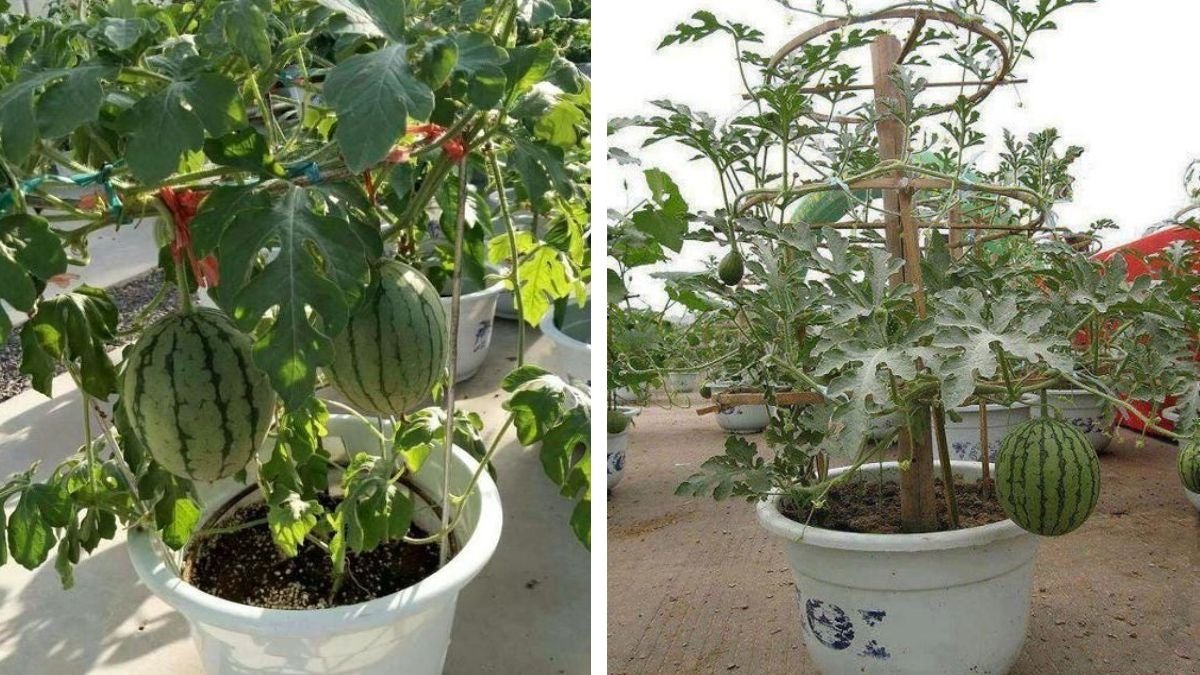
If you’ve ever dreamed of harvesting juicy, homegrown watermelons but thought you needed a large backyard or farm, here’s the good news — you don’t! With a few simple tricks, you can successfully grow delicious watermelons in containers, even on a small patio or balcony. Container gardening makes it possible for anyone to enjoy the sweetness of fresh melons right at home — no matter how limited your space is.
In this guide, we’ll walk you through everything you need to know about growing watermelons in containers, from selecting the right varieties and soil mix to caring for your plants and harvesting perfect fruits.
1. Why Grow Watermelons in Containers?
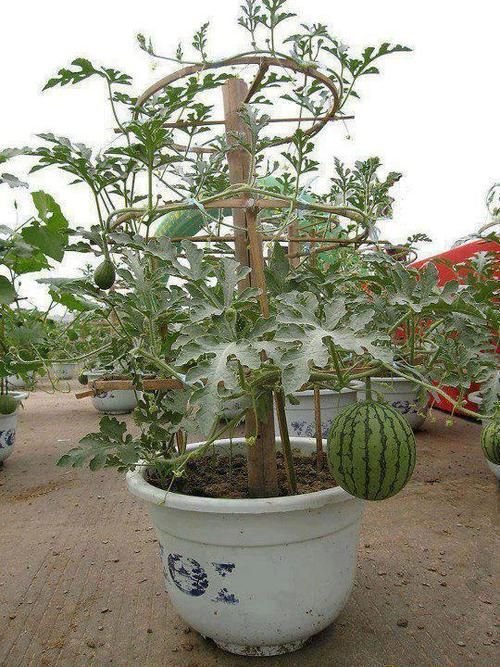
Growing watermelons in containers offers several benefits:
- Space-saving: You can grow them on patios, balconies, or rooftops — perfect for urban gardeners.
- Mobility: Containers can be moved to ensure your plants get maximum sunlight.
- Pest control: Growing in pots reduces soil-borne diseases and pest issues common in the ground.
- Control over soil quality: You can create the ideal growing environment using nutrient-rich soil mixes.
Even though watermelons are sprawling plants, with the right setup, they can thrive in containers and reward you with sweet, juicy fruits.
2. Choosing the Right Watermelon Variety for Containers
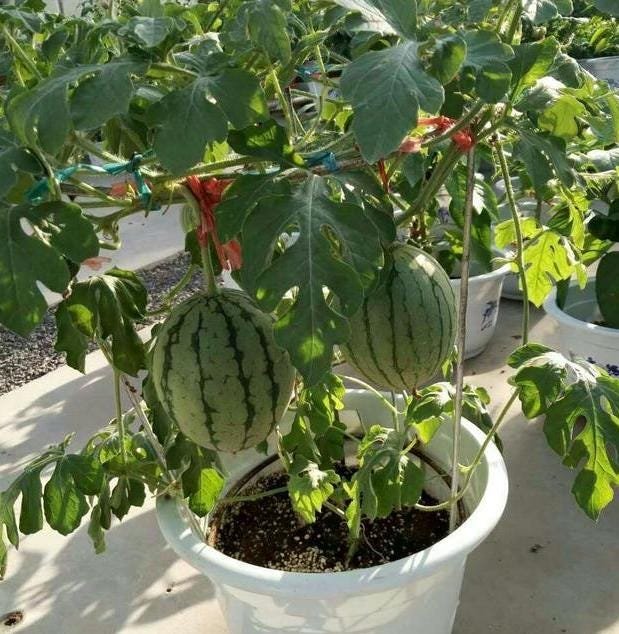
Not all watermelon varieties are suitable for container gardening. Since space is limited, you’ll want to choose compact or dwarf varieties that grow well in small spaces.
Here are some of the best container-friendly watermelon types:
- Sugar Baby: A popular small variety producing 6–10 lb melons; matures in about 75 days.
- Mini Love: A compact vine that yields 5–7 lb fruits; sweet and crisp.
- Bush Sugar Baby: Specifically bred for containers; smaller vines and fruits.
- Golden Midget: Matures quickly in about 70 days; golden skin with sweet pink flesh.
These mini or “bush” types are ideal for growing in containers without the plants taking over your space.

3. Selecting the Right Container
The container size plays a crucial role in watermelon growth. These plants develop deep roots and require plenty of space for healthy growth.
- Container Size: Use at least a 20–25-gallon container (around 18–24 inches deep and wide). The bigger, the better — it supports stronger roots and larger fruits.
- Material: Choose containers made of plastic, fabric, or wood with good drainage holes at the bottom.
- Drainage: Ensure proper drainage to prevent waterlogging, which can lead to root rot.
If you have limited space, try grow bags (at least 20 gallons) — they are affordable, breathable, and promote healthy root development.
4. Preparing the Perfect Soil Mix
Watermelons love rich, well-draining soil that’s packed with organic matter. A lightweight mix helps roots breathe and ensures steady moisture.
Here’s a great soil mix recipe for watermelon containers:
- 40% high-quality garden soil or potting mix
- 30% compost or well-rotted manure
- 20% coco peat or peat moss (for moisture retention)
- 10% perlite or coarse sand (for drainage)
Mix in a handful of bone meal or slow-release organic fertilizer to provide a steady supply of nutrients. Watermelons are heavy feeders, so nutrient-rich soil is essential.
5. Planting Watermelon Seeds or Seedlings

You can start your watermelon plants from seeds or purchase young seedlings from a nursery.
Starting from Seeds:

- Sow 2–3 seeds per container about 1 inch deep in the center.
- Water gently and keep the soil moist (not soggy).
- Seeds usually germinate in 5–10 days in warm conditions (around 70–90°F or 21–32°C).
Once seedlings have two sets of true leaves, thin them out, leaving only the strongest plant to continue growing.
Tip: If you’re in a cooler region, start seeds indoors 3–4 weeks before the last frost and transplant them outdoors once temperatures rise.
6. Providing Sunlight and Temperature
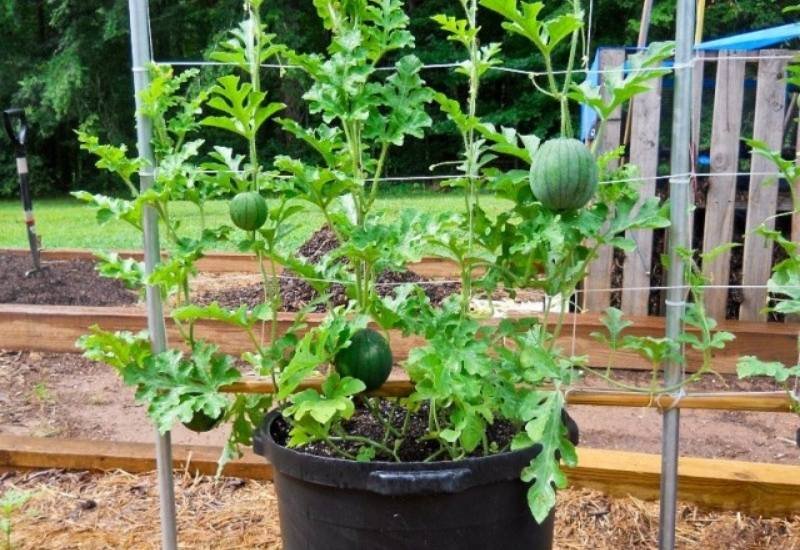
Watermelons are sun-loving plants that need at least 8–10 hours of direct sunlight daily. Place your container in a spot where the plant can soak up maximum sunshine — patios, balconies, or rooftops are perfect.
They grow best in warm temperatures between 70°F and 90°F (21–32°C). If it’s too cold, growth will slow down. You can use black containers to help retain heat in cooler areas.
7. Watering Tips for Container Watermelons
Proper watering is one of the most important parts of growing healthy watermelons.
- Keep the soil consistently moist, especially during flowering and fruit development.
- Avoid overwatering, as soggy soil can cause root rot.
- Water deeply 2–3 times a week, depending on the weather.
- Use mulch (like straw or dried leaves) to retain soil moisture and regulate temperature.
Once fruits begin to mature, reduce watering slightly to enhance sweetness.
8. Fertilizing for Healthy Growth
Since container plants rely solely on the nutrients you provide, feeding them regularly is key.
Here’s a simple feeding schedule:
- Early Growth (2–3 weeks after germination): Use a balanced fertilizer (10-10-10 NPK) or organic compost tea.
- Before Flowering: Switch to a fertilizer rich in phosphorus and potassium (like 5-10-10) to encourage flowering and fruiting.
- During Fruit Development: Apply liquid seaweed or fish emulsion every 2–3 weeks to boost sweetness and growth.
Avoid excessive nitrogen once flowers appear, as it can lead to lush vines but fewer fruits.
9. Supporting and Training the Vines
Watermelon vines can grow long even in containers, so managing them properly helps save space and prevents damage.
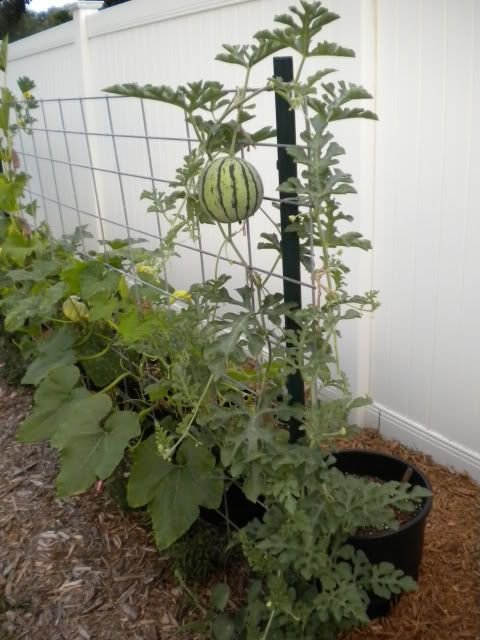
- Use a sturdy trellis, cage, or netting to train vines upward if space is tight.
- Secure developing fruits in slings made of old fabric or mesh to support their weight.
- Prune excess vines and leaves to direct the plant’s energy toward fruit production.
Training the vines vertically keeps them tidy, improves air circulation, and reduces the risk of pests and diseases.
10. Pollination: Ensuring Fruit Set
Watermelons rely on pollination to produce fruit. Since container gardens often have fewer pollinators, you may need to hand-pollinate the flowers.
- Male flowers appear first, followed by female flowers (with a tiny fruit-like bump beneath the bloom).
- Use a small brush or cotton swab to transfer pollen from a male flower to the center of a female flower.
- Pollinate in the morning when flowers are open and fresh.
Successful pollination results in the female flower swelling into a tiny watermelon within a few days.
11. Managing Pests and Diseases
While container gardening reduces pest issues, some problems can still occur.

Common pests include aphids, spider mites, and whiteflies. Spray plants with neem oil or insecticidal soap every few weeks.
Watch out for diseases like powdery mildew or fungal leaf spots — ensure good airflow and avoid overhead watering to prevent these.
Keeping the vines healthy with proper spacing, pruning, and sunlight is the best preventive measure.
12. Harvesting Your Container-Grown Watermelons
The most exciting part of growing watermelons is, of course, harvesting! But how do you know when they’re ready?
Here are some clear signs:
- The bottom of the fruit (where it touches the soil or support) turns from white to creamy yellow.
- The tendrils near the stem dry and turn brown.
- The skin loses its shine and becomes dull.
- A hollow sound when tapped indicates ripeness.
Carefully cut the fruit from the vine with a sharp knife or pruning shears, leaving a short stem attached.
13. Post-Harvest Care and Regrowth
Once you’ve harvested, you can continue to care for the vine to produce more fruits, especially in warm climates. Trim dead leaves, fertilize lightly, and keep watering regularly.

After the season ends, compost the old plant and reuse the container with fresh soil for the next planting cycle.
14. Extra Tips for Success
- Rotate your containers every few days to ensure all sides get sunlight.
- Use companion plants like marigolds or basil nearby to deter pests naturally.
- Check soil moisture regularly — container soil dries out faster than garden beds.
- Harvest early in the morning for the best flavor and juiciness.
Conclusion
Growing watermelons in containers is not only possible but surprisingly easy and rewarding. With the right variety, soil, and care, even a small patio can produce delicious, homegrown melons bursting with sweetness. It’s a fantastic way to enjoy the thrill of gardening — no large yard required.
So, grab a pot, some seeds, and start your container watermelon garden today. Before you know it, you’ll be slicing into your very own juicy, sun-ripened watermelon, grown right on your patio!

Leave A Comment