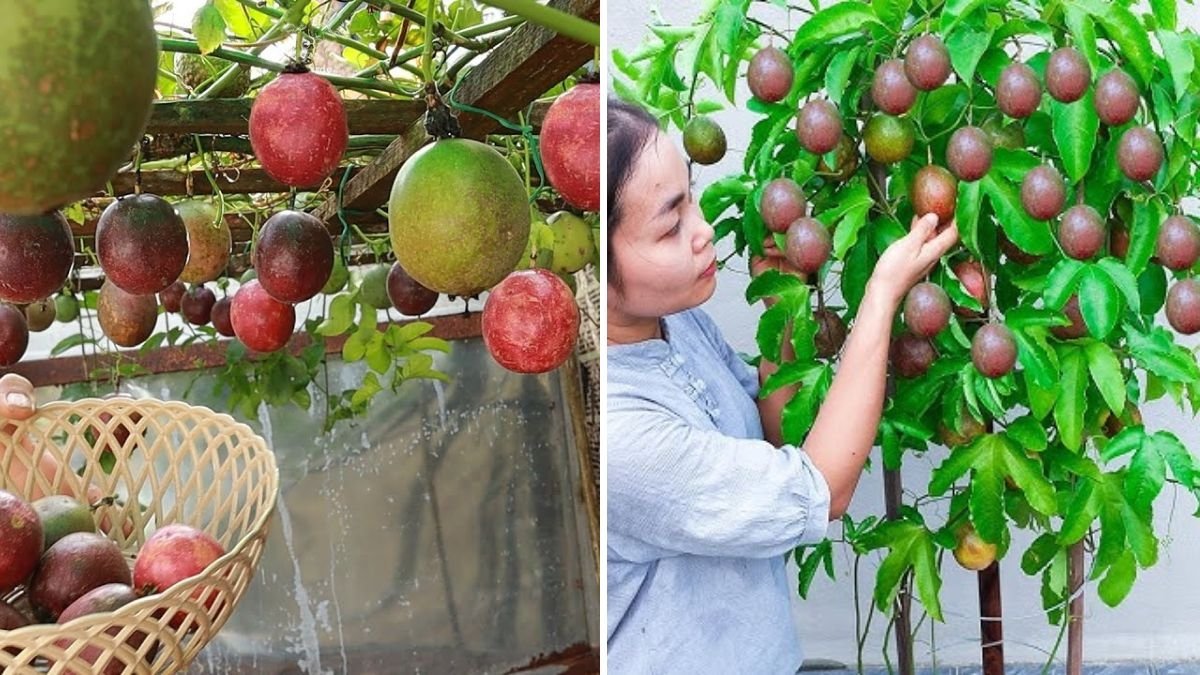
If you’ve ever enjoyed the tropical, sweet-tart flavor of passion fruit, you’ve probably dreamed of picking it fresh from your own vine. The good news is that you don’t need a large garden or even a backyard to grow this exotic fruit. With the right setup, you can successfully grow passion fruit in containers right on your balcony, terrace, or patio!
In this comprehensive guide, we’ll explore the step-by-step method of growing passion fruit in containers, so even families without gardens can enjoy fresh, homegrown passion fruits. You’ll learn everything from choosing the right container and soil mix to pruning, pollination, and harvesting — all simplified for beginners.
1. Understanding the Passion Fruit Plant

Passion fruit (Passiflora edulis) is a fast-growing, perennial vine native to South America but cultivated worldwide for its delicious fruit and beautiful flowers. The plant is part of the Passiflora genus and is known for its vigorous climbing nature.
There are two main types of passion fruit commonly grown:
- Purple passion fruit (Passiflora edulis):
Smaller, sweeter, and ideal for cooler or subtropical climates. - Yellow passion fruit (Passiflora edulis flavicarpa):
Larger and more acidic, well-suited for tropical and warm regions.
Both types can thrive in containers if provided with adequate sunlight, support, and care.
2. Why Grow Passion Fruit in Containers?

Container gardening is perfect for people who live in apartments or homes with limited outdoor space. Here’s why passion fruit is an excellent choice for container growing:
- Space-saving: The plant grows vertically, so it’s ideal for small balconies or patios.
- Easier to control: You can move the container for optimal sunlight or protection during harsh weather.
- Low maintenance: Requires minimal pruning and watering once established.
- Beautiful appearance: The lush green leaves and stunning purple-white flowers add a tropical vibe to any home.
3. Materials You’ll Need
Before you start, gather the following items:
- Passion fruit seeds or cuttings (from a ripe fruit or nursery plant)
- Large container (at least 18–24 inches deep and wide)
- Well-draining soil mix (loam + compost + sand)
- Organic compost or fertilizer
- A trellis, pole, or wire support
- Watering can or spray bottle
- Mulch (optional)
If you’re starting from seed, choose a fresh, ripe fruit to extract seeds. If using a cutting or nursery sapling, skip to the planting stage.
4. Extracting and Preparing Seeds (If Starting from Fruit)
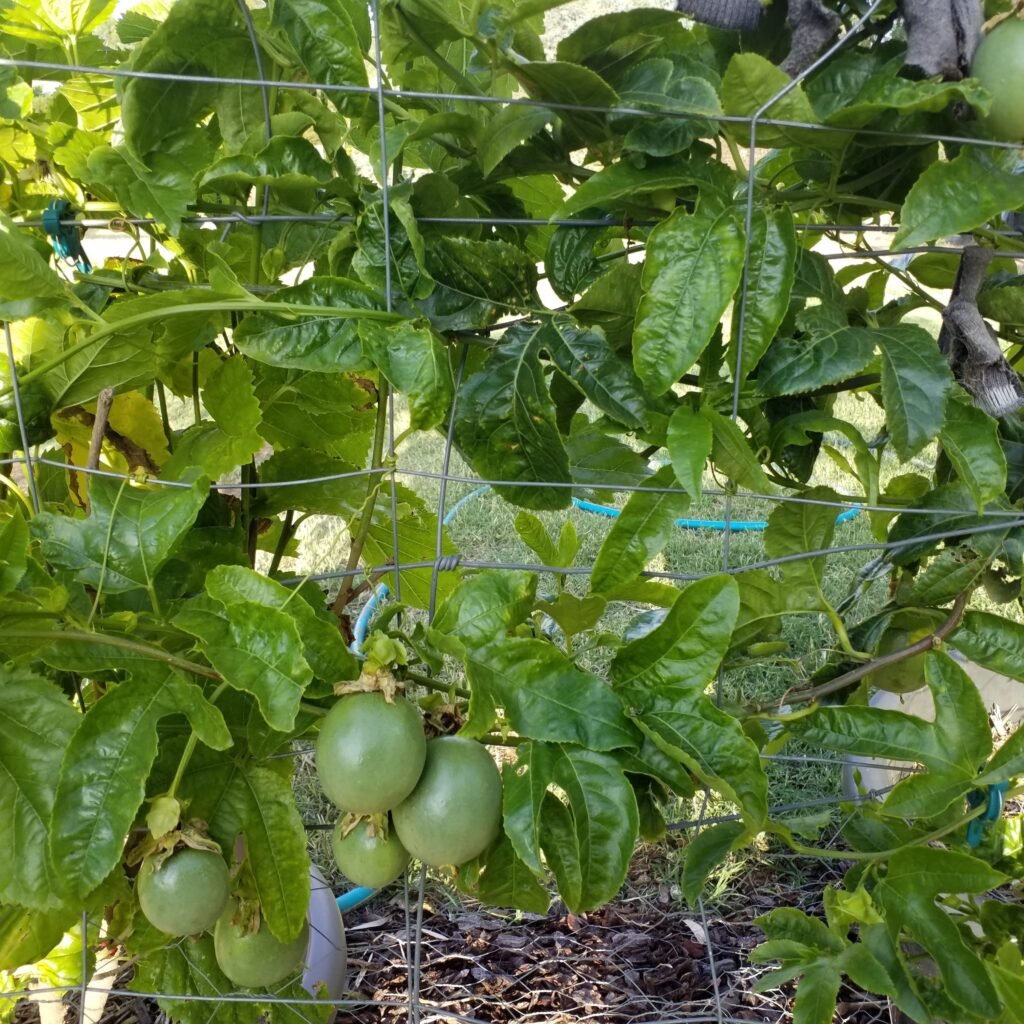
- Select a ripe passion fruit:
Choose one that’s wrinkled and fully purple or yellow — signs of ripeness. - Scoop out the seeds:
Slice the fruit open and scoop out the pulp and seeds into a bowl. - Clean the seeds:
Rinse them in water to remove the sticky pulp coating. You can soak them for 24 hours to speed up germination. - Dry the seeds:
Spread them on a paper towel and let them air dry for a day before planting.
Alternatively, you can propagate from stem cuttings, which is faster. Take a 6–8 inch healthy cutting from a mature vine and let it dry for a day before planting in moist soil.
5. Preparing the Container and Soil Mix
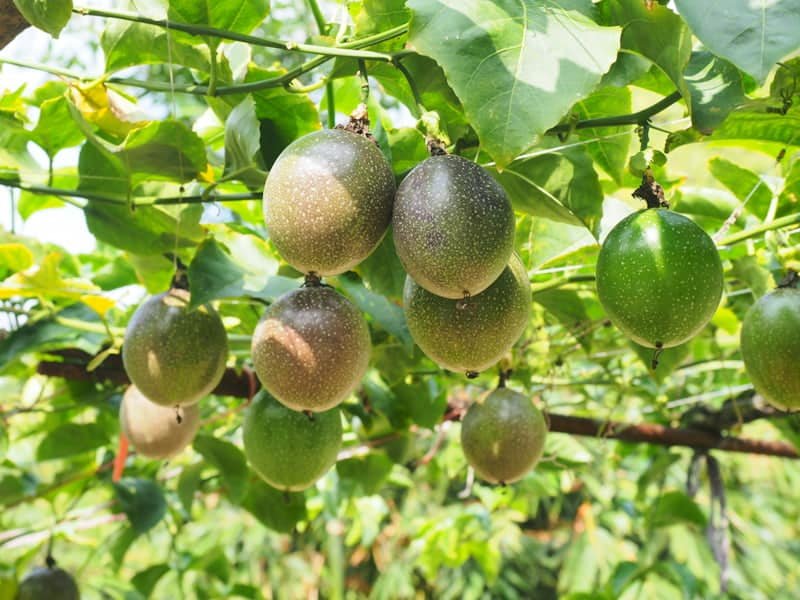
The container and soil play a major role in the plant’s growth and fruiting potential.
Container Selection
- Choose a large, deep pot (minimum 20–25 liters) with good drainage holes.
- Plastic, ceramic, or clay pots all work — just make sure they have proper airflow and drainage.
- Since passion fruit is a vigorous climber, insert a sturdy trellis or pole into the container at the time of planting.
Soil Preparation
Passion fruit thrives in well-draining, nutrient-rich soil. A simple, effective mix includes:
- 50% garden soil or loam
- 25% sand or perlite (for drainage)
- 25% organic compost or cow manure
You can also add a handful of bone meal or neem cake for extra nutrients and pest resistance.
6. Planting the Seeds or Cuttings
If Starting from Seed:
- Fill small pots or seed trays with the prepared soil mix.
- Sow seeds about ½ inch deep and lightly cover them with soil.
- Water gently to keep the soil moist but not soggy.
- Place in a warm, bright area with indirect sunlight.
- Germination usually takes 2–3 weeks.
Once seedlings reach about 6–8 inches in height, transplant them into the large container.
If Starting from Cuttings:
- Insert the cutting 2–3 inches deep in moist soil near the support pole.
- Keep the container in partial shade for a week until roots develop.
- Water lightly every few days to keep the soil moist.
- New leaves will appear within 2–3 weeks, indicating successful rooting.
7. Providing Support for the Vine
Passion fruit vines need strong support to climb and produce fruit effectively. You can use:
- A bamboo pole or wooden stake inside the pot
- A metal trellis or wire fence on the wall
- Hanging rope systems if space is tight
As the plant grows, tie the young shoots gently to the support to guide their direction. Once mature, the vines will naturally twine around the structure.
8. Watering and Sunlight Requirements
Passion fruit loves warm, sunny weather and regular watering.
Watering:
- Keep the soil consistently moist but not waterlogged.
- Water 2–3 times a week in summer; reduce frequency in cooler months.
- Avoid letting the soil dry out completely, as it can affect flowering.
Sunlight:
- Provide 6–8 hours of full sunlight daily.
- If growing indoors or on a shaded balcony, place near a bright window or use grow lights.
Sunlight is key for flowering and fruit production, so ensure your vine gets enough exposure.
9. Fertilizing for Healthy Growth
Passion fruit is a heavy feeder, especially during its growing season.
- During early growth:
Use a nitrogen-rich fertilizer (like 10-5-5) once every two weeks to promote leafy growth. - During flowering and fruiting:
Switch to a phosphorus and potassium-rich fertilizer (5-10-10) to encourage blooming and fruit formation. - Organic alternatives:
Apply compost tea, vermicompost, or liquid seaweed fertilizer every month for steady nutrient supply.
Avoid excessive nitrogen later on — it promotes leaf growth at the expense of flowers and fruits.
10. Pruning and Maintenance
Pruning helps control the vine’s size and boosts fruit production.
- Remove weak or tangled vines to improve airflow.
- Cut off dead or dry stems regularly.
- Once the vine reaches the top of the trellis, pinch the tips to encourage side shoots — this is where flowers and fruits will develop.
Also, clear out any weeds or fallen leaves around the base to prevent pests and diseases.
11. Flowering and Pollination
Passion fruit plants usually start flowering within 6–12 months after planting. The flowers are large, fragrant, and bloom for just one day.
- Self-pollinating varieties (mostly purple types) can fruit naturally.
- Cross-pollinating varieties (often yellow types) may require manual pollination.
Hand Pollination Method:
- Early in the morning, use a small brush or cotton swab.
- Collect pollen from the flower’s stamens (male part).
- Gently dab it on the stigma (female part).
- Repeat for all open flowers to increase yield.
Pollinated flowers will develop into small green fruits that mature in 2–3 months.
12. Harvesting Passion Fruits
Passion fruits are ready to harvest when:
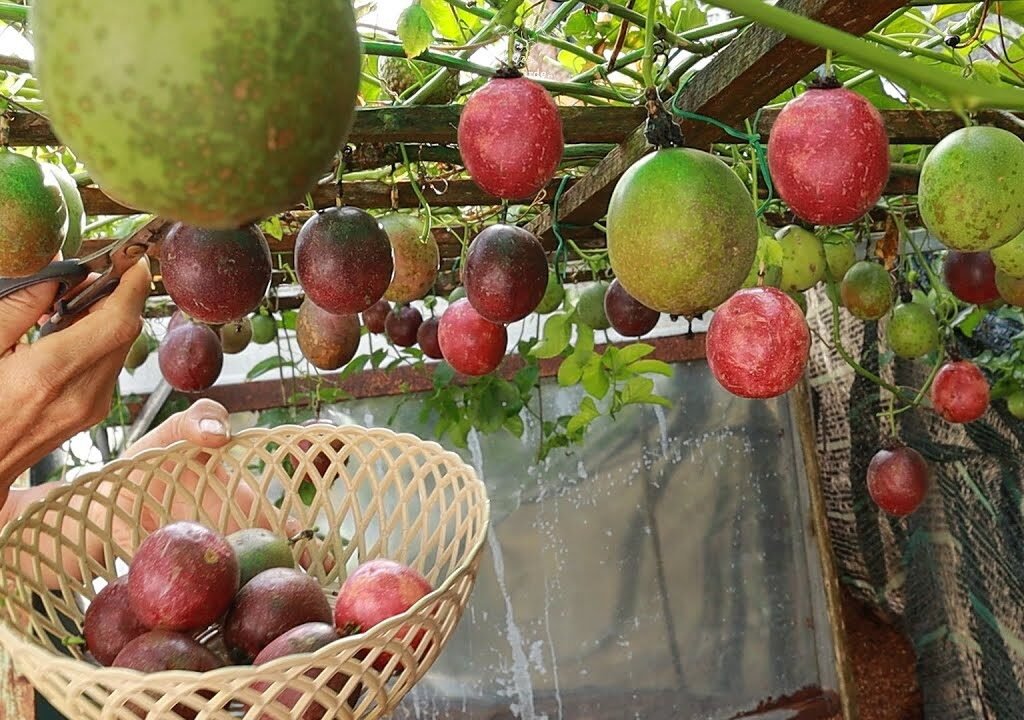
- The skin turns deep purple or golden yellow, depending on the variety.
- The fruits start to wrinkle slightly and feel heavy for their size.
- They easily detach from the vine when gently twisted.
Harvest with scissors or pruning shears, leaving a small stem attached. Freshly picked passion fruits are bursting with tropical flavor — perfect for juices, desserts, and smoothies.
13. Common Problems and Solutions
| Problem | Cause | Solution |
|---|---|---|
| Yellowing leaves | Overwatering or nutrient deficiency | Improve drainage and apply organic compost |
| No flowers/fruits | Lack of sunlight or improper pruning | Ensure 6+ hours of light and prune regularly |
| Aphids or mealybugs | Poor airflow | Spray with neem oil or insecticidal soap |
| Fungal infections | Wet leaves or poor drainage | Water at base and use copper-based fungicide if needed |
14. Overwintering and Long-Term Care
In cooler regions, passion fruit plants can be overwintered indoors:
- Move the container indoors before the first frost.
- Place it in a bright, sunny area.
- Reduce watering frequency but don’t let the soil dry out completely.
In spring, prune lightly and move the plant back outdoors when temperatures rise.
A healthy passion fruit vine can live for 5–7 years and produce abundant fruit each season with proper care.
15. Conclusion
Growing passion fruit in containers is an excellent option for families without gardens who still want to enjoy the joy of homegrown tropical fruit. It’s easy, space-efficient, and highly rewarding — all you need is sunlight, a sturdy pot, and a bit of patience.

With this simple container-growing method, you can transform your balcony or terrace into a mini tropical paradise. From watching the beautiful flowers bloom to harvesting sweet, aromatic fruits, every stage of the journey brings excitement and satisfaction.
So don’t wait — grab a pot, plant your passion fruit vine, and bring the taste of the tropics right to your home!

Leave A Comment