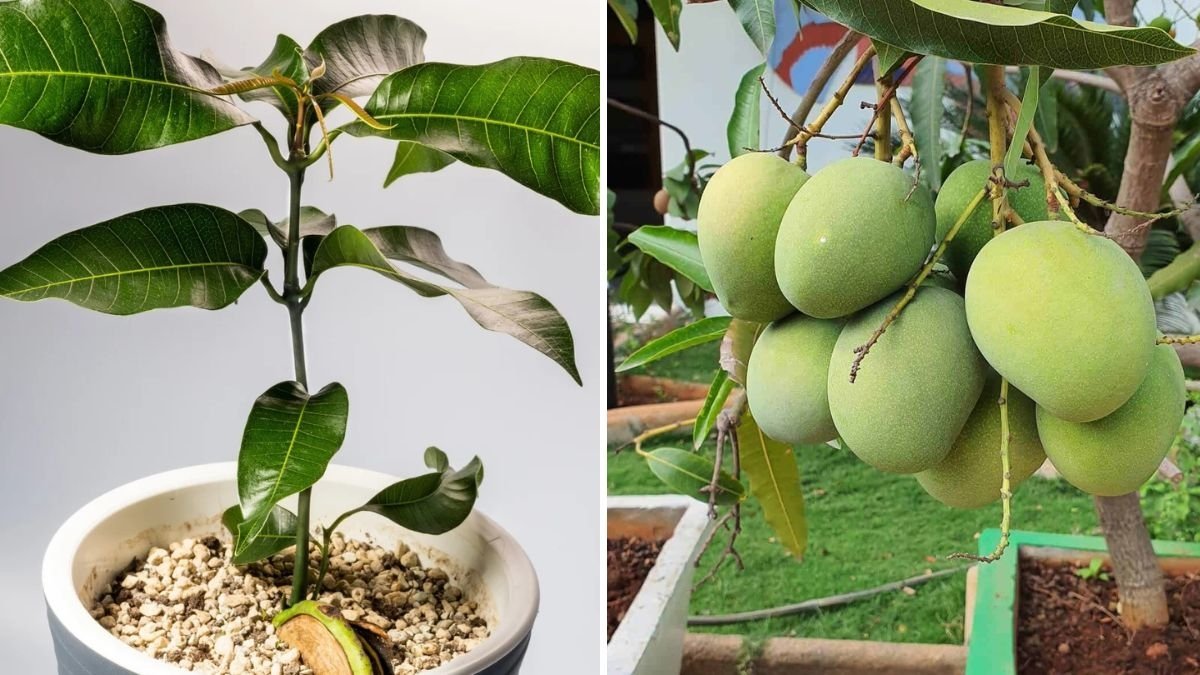
Growing a mango tree from seed is one of the most rewarding gardening experiences you can have. Not only will you enjoy the process of nurturing a tropical plant from its earliest stages, but you’ll also eventually be rewarded with delicious, juicy mangoes right from your own backyard or balcony. Whether you’re a beginner or an experienced gardener, learning how to grow a mango tree from seed can be a fun and educational project that deepens your connection with nature.
In this detailed guide, we’ll walk you through everything you need to know — from choosing the right mango seed to germinating, transplanting, and caring for your young tree — all the way until it matures into a fruit-bearing plant.
Step 1: Choose the Right Mango Seed
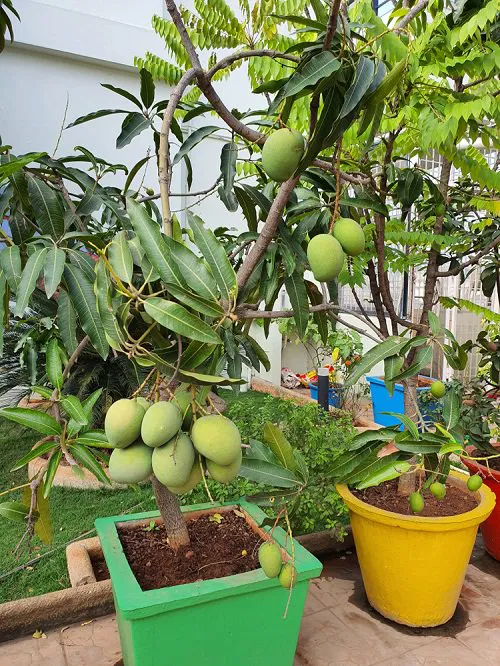
The first and most important step is selecting a good-quality mango. Always start with a ripe, healthy mango, preferably one that’s organically grown. Avoid hybrid varieties because their seeds may not produce trees that bear the same type of fruit as the parent mango.
Try to pick a local variety that grows well in your climate — such as Alphonso, Kesar, Dasheri, or Banganapalli in India. Local mangoes are more likely to thrive in your soil and weather conditions.
Once you’ve enjoyed eating the fruit, carefully remove the seed from the pulp. Wash it thoroughly with water to remove any sticky residue.
Step 2: Prepare the Mango Seed for Germination

Inside the thick, fibrous husk of the mango is the true seed. To improve your chances of germination, you’ll need to extract the seed from its shell.
Here’s how to do it safely:
- Hold the husk flat on a clean surface.
- Use a small knife or pair of scissors to carefully open one side.
- Gently pry it open and remove the inner seed, which looks like a large bean.
Some mango seeds may already show a small sprout, which means germination has started naturally — that’s a great sign!
Step 3: Pre-Germinate the Mango Seed (Paper Towel Method)
To help the seed sprout faster, you can use the paper towel germination method:
- Wrap the cleaned seed in a damp paper towel.
- Place it inside a zip-lock bag or plastic container to retain moisture.
- Store it in a warm, dark place (like a kitchen cabinet or near a window with indirect sunlight).
- Keep checking the paper towel every few days to ensure it stays moist but not soggy.
Within 1 to 3 weeks, you should see a small root (radicle) emerging from the seed. Once this happens, it’s ready for planting.
Step 4: Planting the Germinated Mango Seed
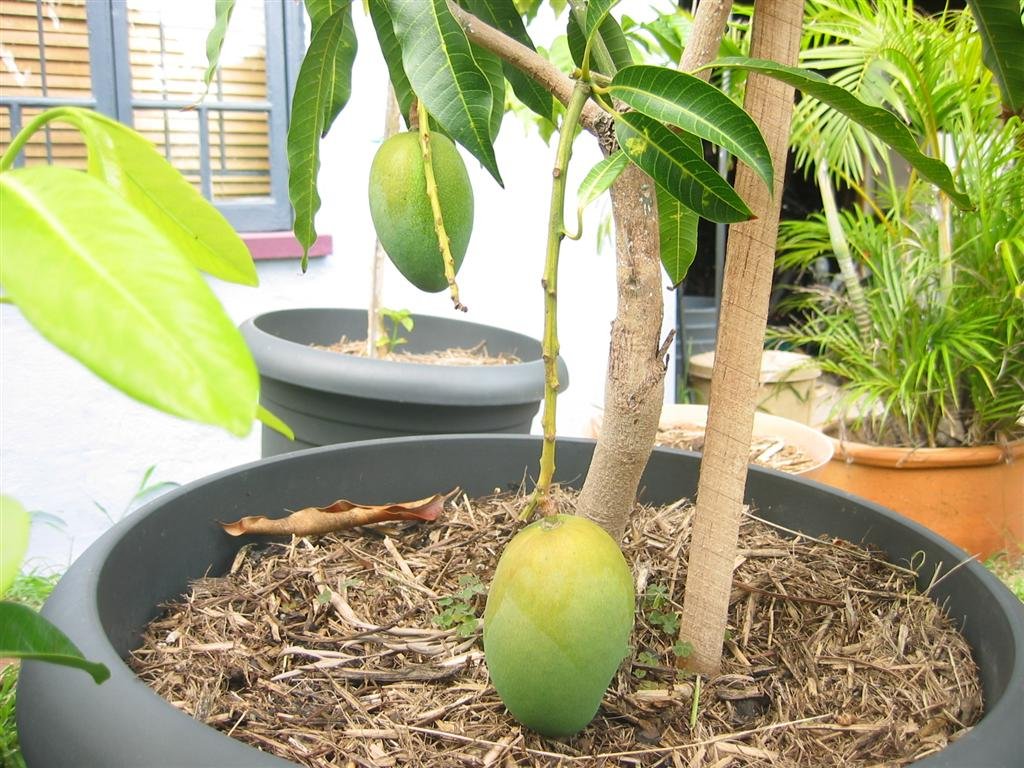
After your mango seed has sprouted, it’s time to plant it in a pot or directly in the ground, depending on your space.
If you’re planting in a pot:
- Choose a container at least 10–12 inches deep with good drainage holes.
- Use a well-draining potting mix. A mix of garden soil, compost, and sand (2:1:1) works perfectly.
- Plant the seed with the root facing downward and the sprouted shoot pointing upward.
- Cover it lightly with soil, leaving a small portion of the sprout visible above the surface.
- Water the soil thoroughly and place the pot in a warm, sunny spot.
If you’re planting directly in the ground:
- Pick a sunny area with fertile, well-drained soil.
- Dig a hole about 1 foot deep.
- Place the seed in the hole, cover it with soil, and water gently.
Step 5: Provide the Right Growing Conditions
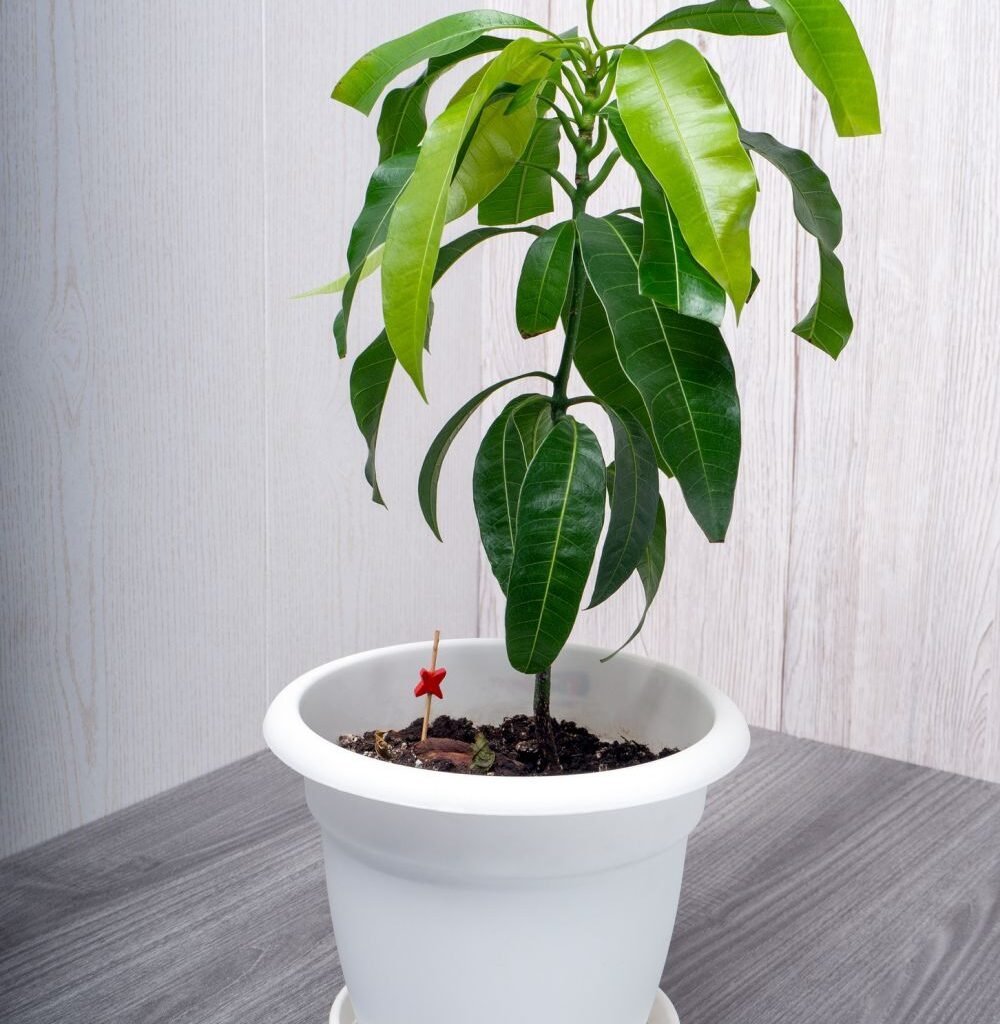
Mango trees love warmth and sunlight. Ensure your plant receives at least 6–8 hours of direct sunlight daily.
Ideal conditions for growth:
- Temperature: Between 25°C and 35°C (77°F–95°F).
- Soil: Slightly acidic to neutral (pH 5.5–7.5).
- Watering: Keep the soil consistently moist during the early stages, but never waterlog it. Overwatering can rot the seed or roots.
Once your mango seedling establishes a few leaves, reduce watering to 2–3 times a week, depending on the climate.
Step 6: Caring for Your Young Mango Tree
After a few weeks, you’ll notice your mango seedling growing taller and stronger. Here’s how to help it thrive:
- Sunlight: Mango trees are tropical and love sunlight. Make sure it gets plenty of it every day.
- Watering: Water deeply but infrequently. Allow the top inch of soil to dry between watering sessions.
- Fertilizing: Use an organic fertilizer or compost every 4–6 weeks during the growing season (spring and summer). Avoid chemical fertilizers early on.
- Mulching: Add a layer of dry leaves or straw around the base to retain soil moisture and suppress weeds.
- Pest Control: Keep an eye out for aphids, mealybugs, or scale insects. Neem oil spray is a safe and natural way to manage them.
Step 7: Transplanting to a Larger Pot or Ground

When your mango plant reaches about 12–18 inches tall, it may start outgrowing its initial pot. This is the right time to transplant it.
If you plan to grow it in a container permanently, choose a large pot (at least 20–25 inches deep). Otherwise, transplant it outdoors in a sunny location.
Transplanting steps:
- Gently remove the plant from its old pot, keeping the root ball intact.
- Place it into a larger pot or ground hole filled with rich, well-draining soil.
- Water thoroughly after transplanting.
Be gentle during this process — mango roots are sensitive and can easily break.
Step 8: Pruning for a Healthy Shape
As your mango tree grows, pruning becomes important for strong structure and better fruiting.
- Pinch off the top of the plant when it’s about 2–3 feet tall to encourage branching.
- Remove any weak, crossing, or crowded branches to allow good airflow.
- Regular pruning helps control height, especially if you’re growing your mango in a pot or small garden.
This step ensures your tree develops a balanced canopy and doesn’t become too tall or leggy.
Step 9: Patience — Waiting for Fruit
Growing a mango tree from seed requires patience. Seed-grown mangoes may take 5–8 years to bear fruit. While this might sound long, the journey of nurturing a tree from seed to maturity is incredibly rewarding.
Some tips to encourage earlier fruiting include:
- Providing consistent sunlight and nutrition.
- Ensuring good pruning and proper watering.
- Avoiding transplant shock — handle the plant gently during moves.
If you want faster results, you can later graft your seed-grown tree with a mature, fruiting mango branch to reduce fruiting time to about 2–3 years.
Step 10: Common Problems and Solutions
Like all plants, mango trees may face a few challenges. Here are some common issues and simple fixes:
- Yellowing leaves: Often caused by overwatering or poor drainage. Let the soil dry before watering again.
- Slow growth: Lack of sunlight or nutrients. Move the plant to a sunnier spot and feed with compost or organic fertilizer.
- Pests: Use neem oil or insecticidal soap every couple of weeks.
- Leaf burn: Happens under intense summer heat. Provide partial shade during peak afternoon hours.
Step 11: Enjoy the Journey
Even if your tree takes years to produce fruit, growing a mango tree from seed is more about the joy of gardening and learning how nature works. Watching your plant sprout, grow, and develop into a tree is deeply satisfying — and when it finally rewards you with that first mango, the taste will be truly special.
If you’re growing in colder regions, you can even keep your mango plant indoors during winter. Just place it near a sunny window or under a grow light to keep it thriving.
Final Thoughts
Growing a mango tree from seed is not just a gardening project — it’s a life lesson in patience, care, and consistency. From a simple fruit seed to a flourishing tropical tree, the process teaches you how life can grow from the smallest beginnings.

With a bit of effort, the right environment, and regular attention, your mango tree can thrive for decades, bringing you shade, beauty, and sweet fruit in return.
So next time you enjoy a delicious mango, don’t toss that seed — plant it! You might just start a new tropical adventure in your own home.

Leave A Comment