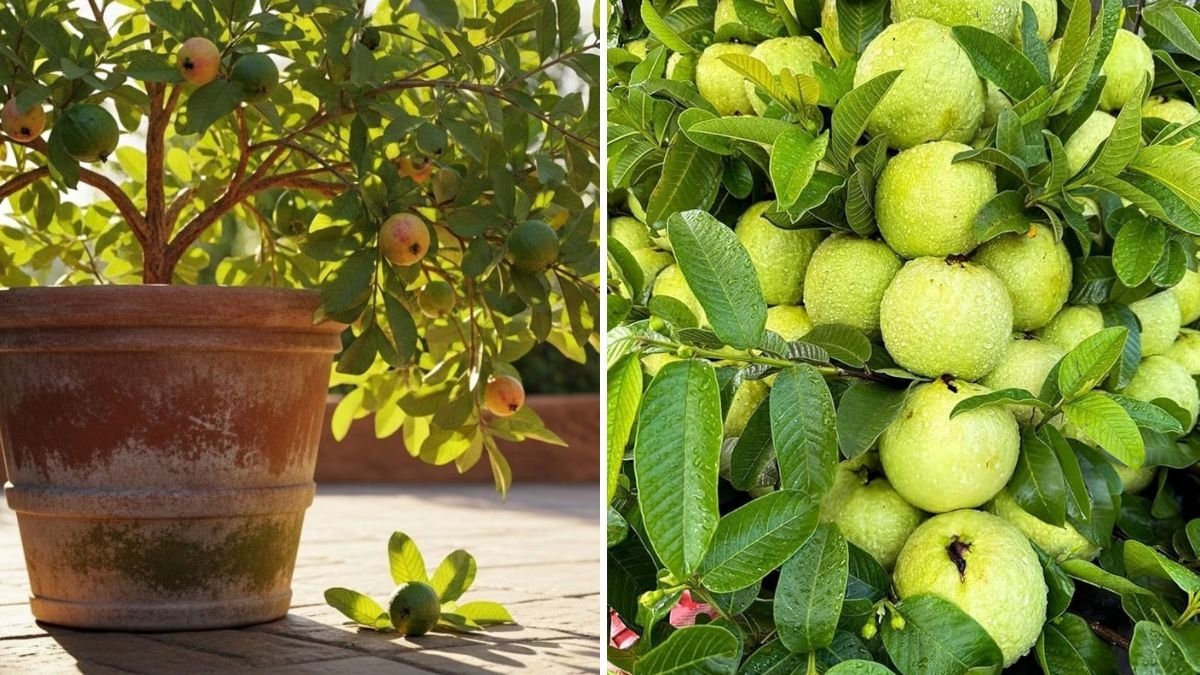
Growing guava in pots is one of the best ways to enjoy this tropical fruit even if you don’t have a large garden. With the right container, soil mix, and care routine, you can harvest up to 15–18 kilograms of fresh guava fruits right from your balcony, terrace, or small backyard. This method works perfectly for home gardeners looking for high yield in limited space.
In this detailed guide, we’ll walk you through every step — from choosing the right variety to pruning, watering, fertilizing, and harvesting — so you can grow a healthy, fruit-laden guava tree in pots.
Step 1: Choosing the Right Guava Variety for Pots

Not all guava varieties are suitable for container growing. You’ll want a dwarf or semi-dwarf variety that remains compact but productive. Some great choices include:
- Thai Guava (White Guava): Produces large, crunchy fruits and adapts well to pots.
- Allahabad Safeda: Known for its high yield and sweet taste.
- Arka Mridula: A dwarf hybrid perfect for pot culture.
- Lalit Guava: Compact, early-bearing, and ideal for container gardening.
Choose a healthy nursery plant about 6–12 inches tall with well-developed roots. Avoid tall, weak plants or those showing yellowing leaves.
Step 2: Selecting the Right Pot
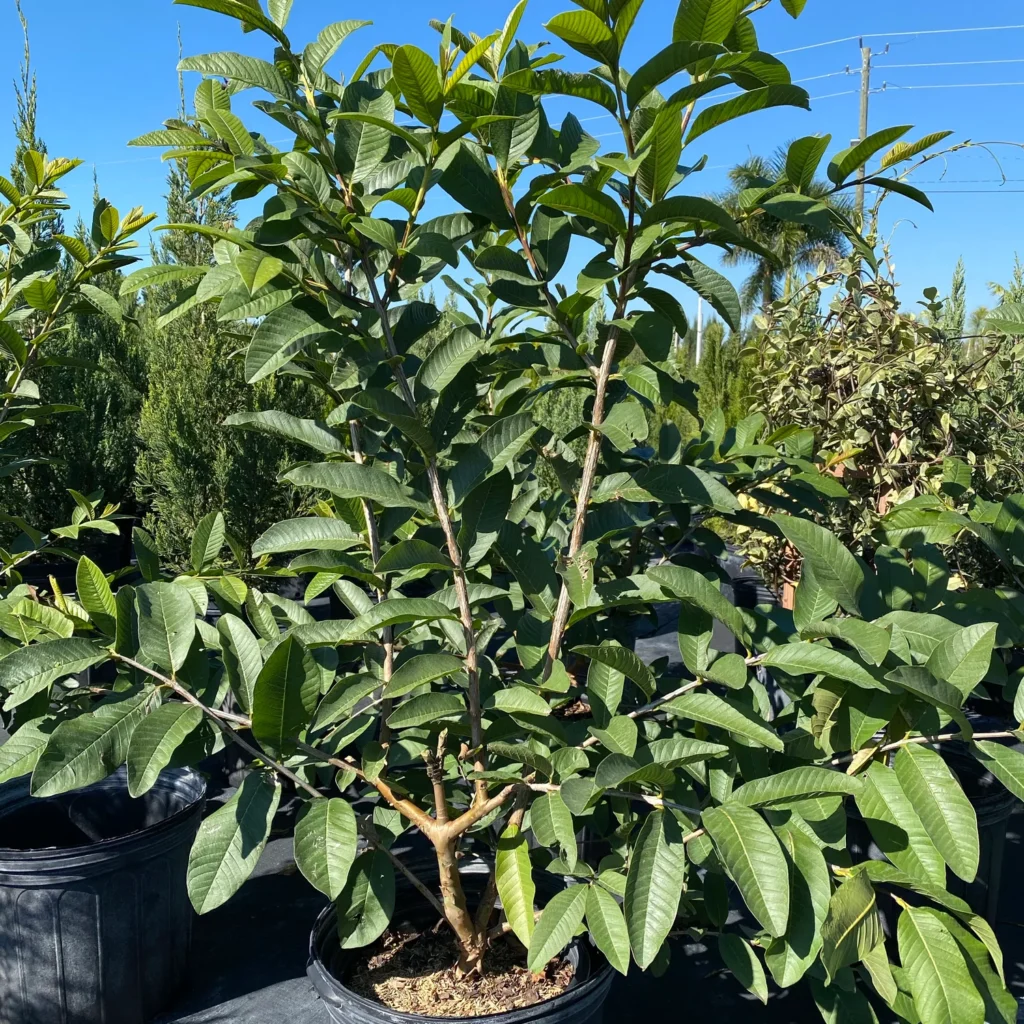
Guava trees need room for their roots to spread. The right container size ensures healthy growth and abundant fruiting.
- Container Size: Use a 20–25 inch (50–60 cm) diameter pot or grow bag.
- Material: Plastic, cement, or clay pots all work, but make sure there are drainage holes at the bottom.
- Drainage Layer: Add a 2-inch layer of gravel or broken clay pieces at the base to prevent waterlogging.
If you’re repotting a guava sapling, handle the roots carefully to avoid damage.
Step 3: Preparing the Ideal Soil Mix
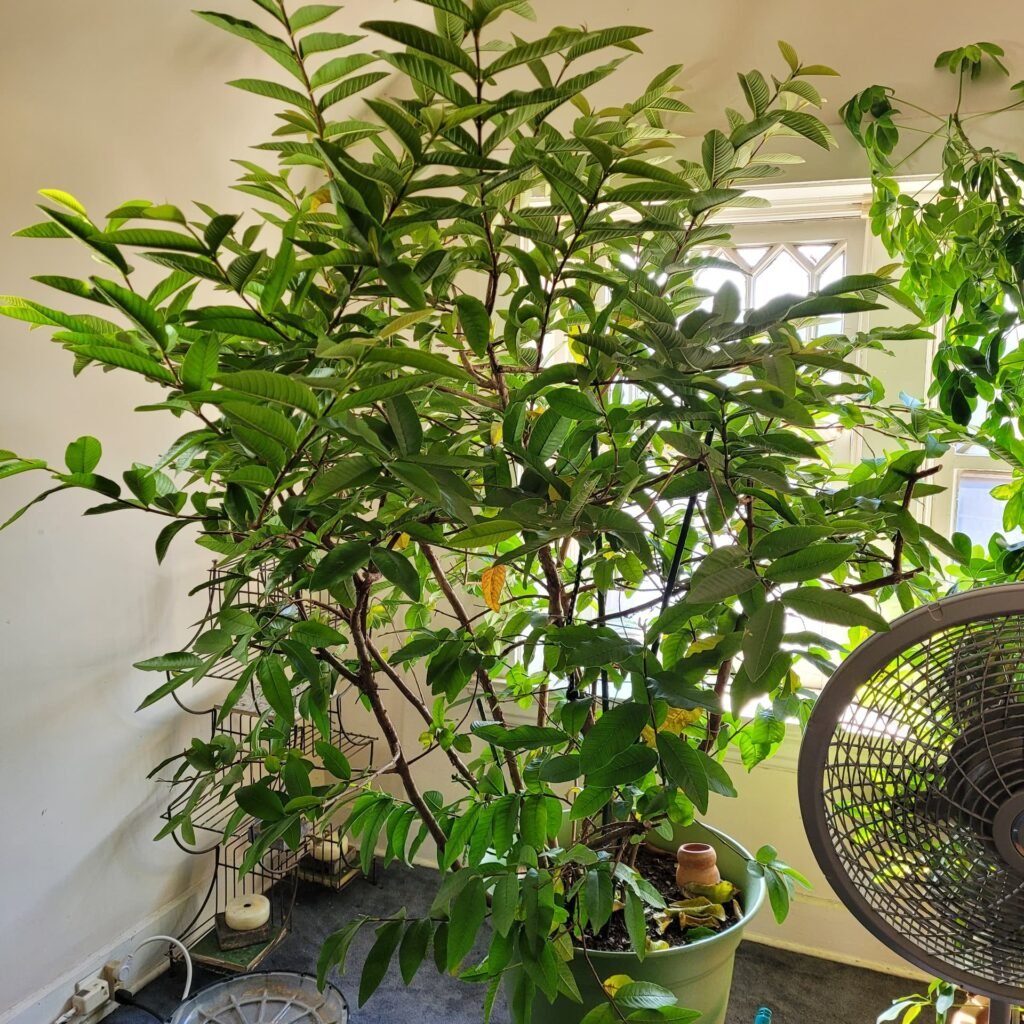
Guava trees prefer loose, well-draining, and fertile soil. A perfect soil mix for container guava includes:
- 40% garden soil
- 30% compost or well-rotted cow dung
- 20% coco peat or river sand
- 10% neem cake powder or bone meal for nutrients
Mix thoroughly and fill the container, leaving 2–3 inches of space at the top. This ensures aeration and healthy root development.
Pro Tip: Guava plants thrive in slightly acidic to neutral soil with a pH between 6.0–7.0.
Step 4: Planting the Guava
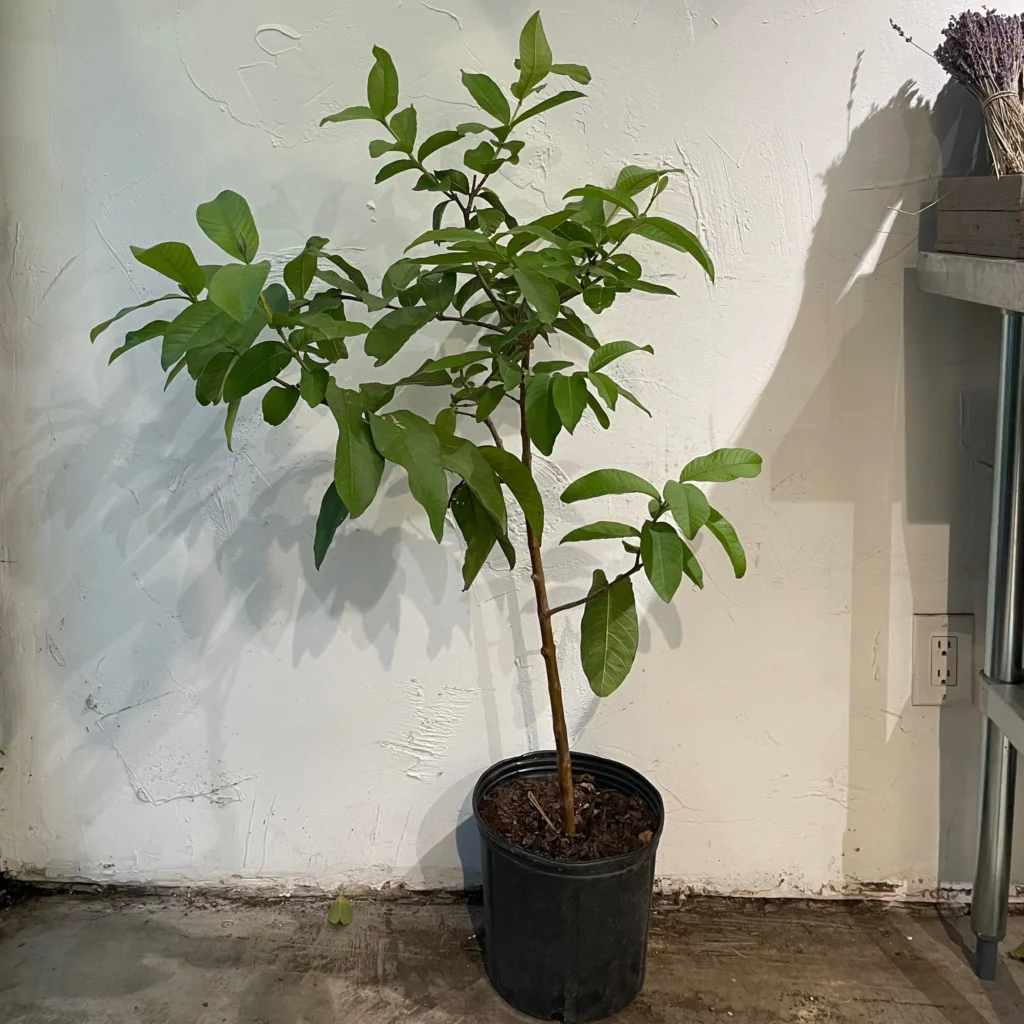
- Fill your pot with the prepared soil mix.
- Dig a hole deep enough to accommodate the root ball.
- Place the guava sapling in the center and cover it gently with soil.
- Press the soil around the base lightly to remove air pockets.
- Water thoroughly after planting.
Place the pot in a sunny location — guava trees need at least 6–8 hours of direct sunlight daily for best growth and fruit production.
Step 5: Watering Schedule
Guava trees love moisture but don’t tolerate soggy soil. The key is to maintain consistent moisture levels.
- Summer: Water 3–4 times a week.
- Winter: Water once or twice a week.
- Young Plants: Need more frequent watering until established.
Always check the top 2 inches of soil — if it feels dry, it’s time to water. Overwatering can lead to root rot, so good drainage is essential.
Step 6: Fertilizing for Heavy Yield
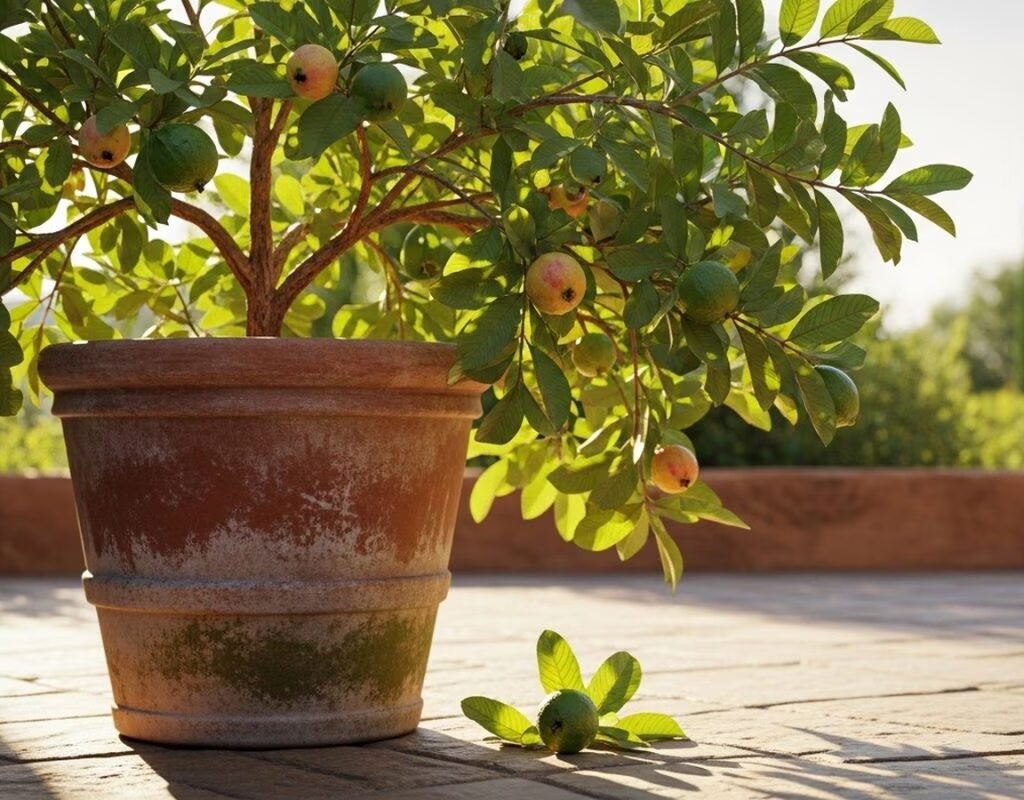
Fertilization plays a big role in achieving that 15–18 kg yield from your potted guava plant. Here’s the feeding schedule:
Every 30–40 days:
- Add 1–2 handfuls of compost or cow dung manure.
- Sprinkle a handful of neem cake powder to prevent soil pests.
- Mix the fertilizer gently into the topsoil and water well.
During flowering and fruiting:
- Use a balanced NPK fertilizer (10:10:10) every 45 days.
- For organic gardeners, use banana peel compost or vermicompost as a natural booster.
Guava trees respond well to organic feeding — it enhances fruit size, sweetness, and aroma.
Step 7: Pruning and Shaping
Pruning is essential to keep your guava tree compact and encourage fruiting branches.
- When to Prune: After fruit harvest or before the start of the growing season (spring).
- How to Prune: Remove dead, weak, or crossing branches. Trim ⅓ of the branch length to encourage new shoots.
- Shaping: Maintain an open canopy to allow sunlight to reach all parts of the plant.
Regular pruning increases flowering and results in larger, more uniform fruits.
Step 8: Pollination and Flowering
Guava trees are self-pollinating, but pollinators like bees can improve fruit set. You’ll notice white flowers appearing within 6–8 months of planting (for grafted or mature plants).
To encourage flowering:
- Ensure full sunlight exposure.
- Avoid over-fertilizing with nitrogen (which promotes leaf growth instead of flowers).
- Maintain moderate watering during the flowering stage.
Step 9: Fruit Development and Harvest
After flowering, small green fruits begin to appear and mature within 3–4 months.
- The fruits are ready when they turn light green to yellowish and emit a fruity aroma.
- Avoid harvesting too early — unripe guavas taste sour and have less sweetness.
- Gently twist the fruit to remove it from the branch instead of pulling.
If grown under ideal conditions, your guava tree can yield 15–18 kilograms of fruits per year — all from a single container!
Step 10: Pest and Disease Management
Container-grown guava plants are generally hardy but can sometimes face these issues:
- Fruit Fly: Causes premature fruit drop. Use fruit fly traps or neem oil sprays.
- Aphids and Mealybugs: Spray diluted neem oil (5 ml per liter of water) every 10 days.
- Leaf Spot or Rust: Avoid overhead watering; prune infected leaves immediately.
Maintain cleanliness around the pot and avoid water stagnation to keep pests away.
Step 11: Winter Care and Repotting
Guava trees are semi-tropical and can tolerate mild cold, but frost protection is necessary in colder regions. Move the container indoors or cover the plant during freezing nights.

Repot every 2–3 years using fresh soil mix to refresh nutrients and give roots more space. Trim about 25% of old roots while repotting.
Step 12: Tips for Maximum Yield
- Use a deep, wide container to promote healthy root growth.
- Provide consistent sunlight and balanced nutrition.
- Mulch with dry leaves or coco husk to retain soil moisture.
- Avoid over-pruning young plants.
- Regularly check for pests and treat early.
With proper care, your potted guava tree will not only look beautiful but also become a productive fruit source year after year.
Final Thoughts
Growing guava in pots is a rewarding experience for any home gardener. It’s easy, space-saving, and delivers abundant, fresh fruits right at your doorstep. By choosing the right variety, maintaining good soil health, and following a regular care schedule, you can achieve an impressive 15–18 kg harvest from a single plant.
Whether you live in a city apartment or have a small backyard, a guava tree in a pot brings tropical flavor, fragrance, and greenery into your space — making your home garden truly fruitful!

Leave A Comment