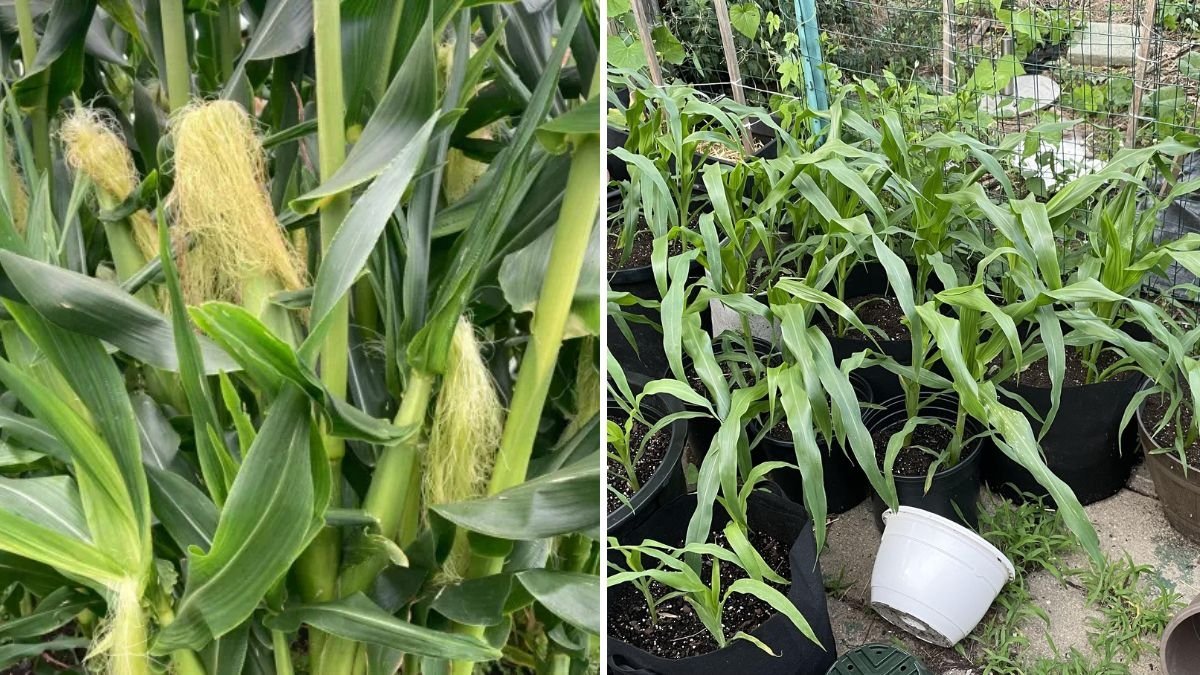
Growing sweet corn is one of the most rewarding experiences for any home gardener. The joy of harvesting plump, golden cobs straight from your own patio or balcony is unmatched. Many people think corn can only be grown in large fields, but with the right techniques, you can successfully grow sweet corn in containers right at home. In this detailed guide, we’ll walk through every stage—from seed to harvest—so you can enjoy fresh, homegrown sweet corn even in small spaces.
Why Grow Sweet Corn in Containers?
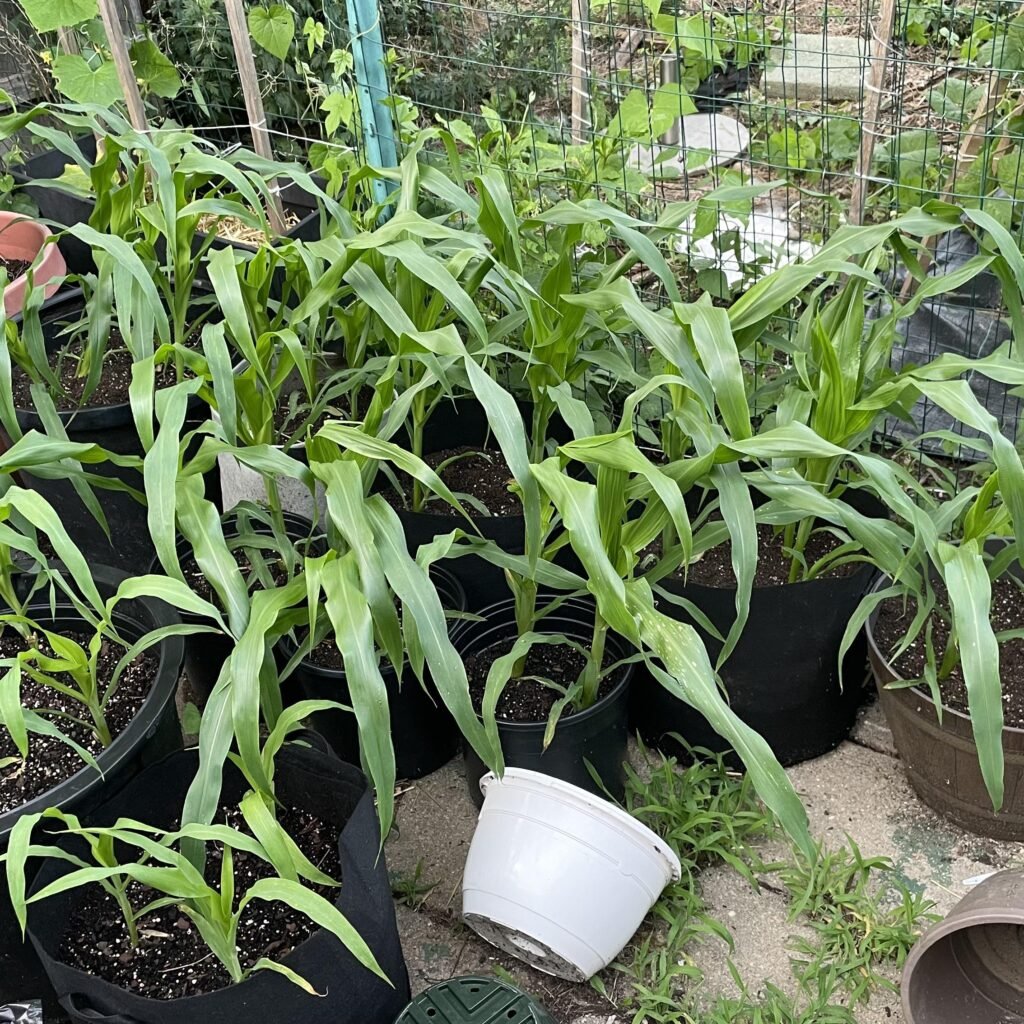
Sweet corn is a summer favorite, known for its juicy kernels and rich flavor. Traditionally, corn requires a lot of space because it grows tall and has an extensive root system. However, with the right container size and proper care, container-grown corn can thrive beautifully.
Here are a few reasons to grow corn in containers:
- Limited space: Ideal for those living in apartments or houses with small patios or balconies.
- Control over soil: You can provide nutrient-rich, well-draining soil.
- Fewer pests: Growing in containers reduces exposure to soil-borne diseases and pests.
- Easy mobility: You can move containers to ensure your corn gets full sunlight.
Step 1: Choosing the Right Variety
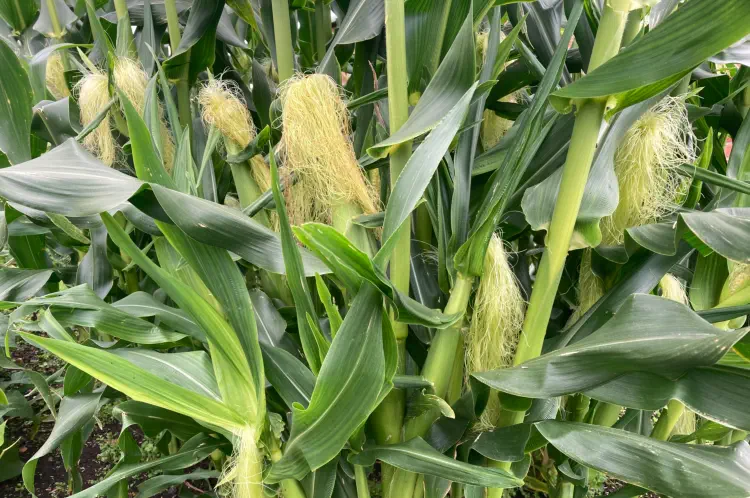
Not all corn varieties are suited for containers. The best choices are dwarf or compact hybrid sweet corn types that don’t grow too tall. Look for varieties like:
- Trinity
- Golden Bantam
- Sugar Pearl
- Sweet Painted Mountain
These varieties mature faster and produce smaller but sweeter ears—perfect for limited space gardening.
Step 2: Selecting the Container
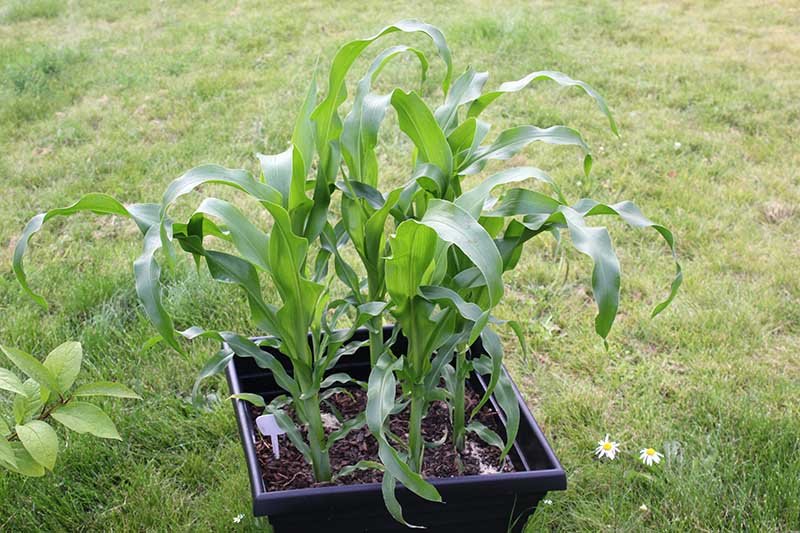
Corn has deep roots and needs space to grow properly. A large container is essential for success. Here’s what to keep in mind:
- Container size: At least 12-15 inches deep and 16-18 inches wide. A 20-gallon container or a half-barrel works perfectly.
- Drainage: Ensure the pot has several holes at the bottom to prevent waterlogging.
- Material: Plastic, terracotta, or wooden barrels are all fine, but lightweight containers are easier to move.
You can even plant several corn stalks together in a rectangular container for better pollination.
Step 3: Preparing the Soil Mix
Corn needs rich, loamy, and well-draining soil for healthy growth. You can prepare a perfect container mix by blending:
- 50% garden soil or compost,
- 30% coco peat or peat moss, and
- 20% perlite or coarse sand for aeration.
Before planting, mix in some organic compost or well-rotted manure. You can also add a slow-release organic fertilizer (such as a balanced 10-10-10 mix) to support long-term nutrition.
Step 4: Planting Corn Seeds
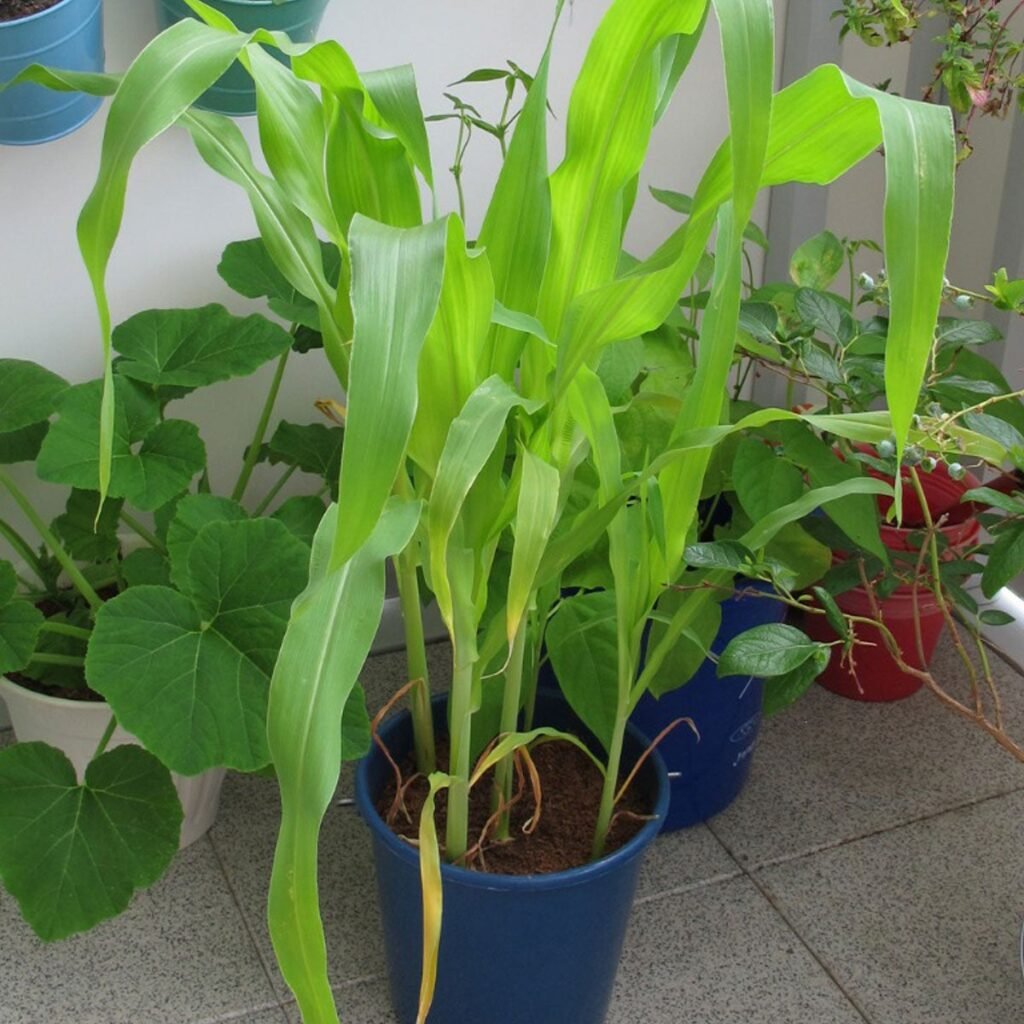
Corn is best grown directly from seeds rather than transplants because it doesn’t like having its roots disturbed.
Here’s how to plant:
- Sow seeds 1 to 1.5 inches deep in the soil.
- Space them 6-8 inches apart if growing multiple stalks in one large container.
- Plant at least 3-4 seeds per container for good pollination.
- Water the soil thoroughly after sowing.
Keep the soil consistently moist but not soggy. Germination usually takes 7-10 days, depending on the temperature.
Step 5: Providing the Right Growing Conditions
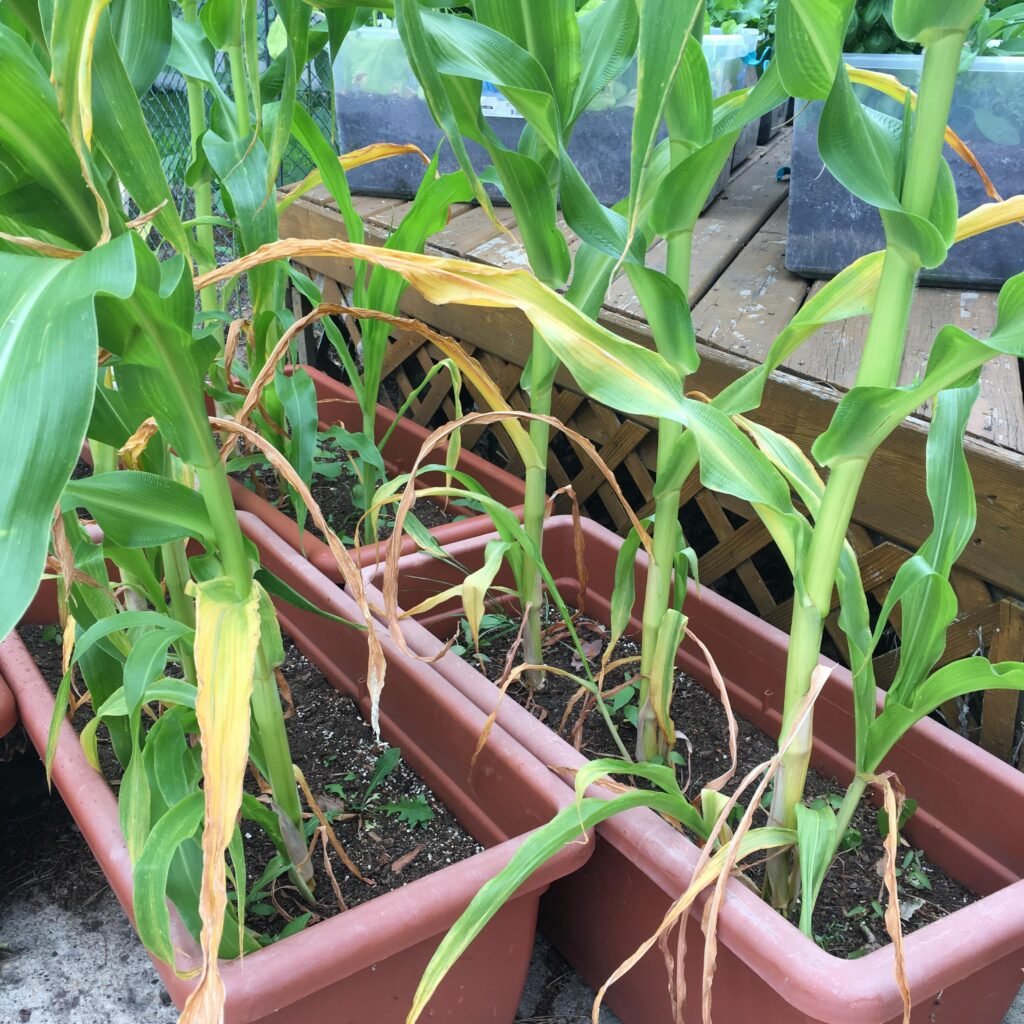
Corn loves sunlight, warmth, and moisture. To ensure healthy growth:
- Sunlight: Place the container in a spot that gets at least 6-8 hours of direct sunlight daily.
- Temperature: Ideal range is 18°C–30°C (65°F–86°F).
- Watering: Corn requires consistent watering, especially during the growing phase. Keep the soil evenly moist, not dry or waterlogged.
- Mulching: Add a thin layer of organic mulch (like straw or dried leaves) to retain moisture and prevent weeds.
Step 6: Fertilizing and Feeding
Corn is a heavy feeder, meaning it requires nutrients throughout its growth cycle. To maintain steady growth and yield:
- Early growth (2-3 weeks after germination): Apply a nitrogen-rich fertilizer like fish emulsion or compost tea to promote leaf and stalk development.
- Tasseling stage: Switch to a fertilizer high in phosphorus and potassium to encourage flowering and cob formation.
- Organic options: Use bone meal, banana peel fertilizer, or seaweed extract for natural nourishment.
Feed your corn every 2-3 weeks during the growing season.
Step 7: Pollination in Containers
Unlike most vegetables, corn relies on wind pollination. In open fields, wind naturally transfers pollen from tassels to silks, but in containers, you need to assist this process manually.
How to hand-pollinate:
- Once the tassels (male flowers) appear at the top of the stalk, gently shake them to release pollen.
- Collect the pollen in a small container or directly dust it onto the silks (female flowers) emerging from the ears.
- Repeat this process daily for about a week to ensure good pollination.
Good pollination is key to full, plump kernels. Without it, you may end up with incomplete cobs.
Step 8: Supporting the Plants
As your corn plants grow taller, they may become top-heavy, especially in windy conditions. Support them by:
- Tying the stalks loosely to bamboo stakes.
- Placing the container near a wall or railing for natural support.
You can also plant low-growing companion plants like beans or squash around the base to stabilize the soil and add extra nutrients.

Step 9: Pest and Disease Control
Corn in containers faces fewer pest issues than ground-grown crops, but some problems can still arise. Common pests include:
- Aphids – Spray with neem oil or insecticidal soap.
- Corn earworms – Cover young ears with fine mesh or fabric to protect them.
- Cutworms – Use diatomaceous earth around the base of the plants.
For diseases like leaf blight or fungal infections, ensure proper air circulation and avoid overhead watering.
Step 10: Harvesting Sweet Corn
The most exciting part of growing corn is the harvest! Sweet corn is usually ready 70–100 days after sowing, depending on the variety.
Signs your corn is ready to harvest:
- The silks turn brown and dry, but the husks remain green.
- When you press a kernel with your fingernail, a milky liquid oozes out (this is called the “milk stage”).
- The ears feel firm and plump when squeezed.
To harvest, hold the stalk firmly and twist the ear downward to snap it off cleanly.

Step 11: Post-Harvest Tips
After harvesting, your corn is at its sweetest right away. The natural sugars start turning into starch soon after picking, so it’s best to cook or refrigerate immediately.
You can boil, grill, or roast your freshly picked corn for a delicious and healthy snack. The homegrown flavor is far superior to store-bought corn!
Extra Tips for Success
- Plant multiple containers: Growing several containers close together improves pollination and yield.
- Rotate crops: Avoid planting corn in the same soil mix repeatedly. Use fresh compost next season.
- Water deeply: Shallow watering encourages weak roots. Always water until moisture reaches the bottom of the pot.
- Harvest promptly: Overripe corn becomes tough and loses sweetness.
Final Thoughts
Growing sweet corn in containers may sound challenging, but with patience and care, it’s entirely possible to enjoy homegrown corn even without a big garden. From selecting the right variety and preparing nutrient-rich soil to hand-pollinating and harvesting sweet golden ears, every step of the process is deeply rewarding.
Whether you’re gardening on a sunny balcony, rooftop, or small backyard, container-grown sweet corn brings a touch of the countryside to your home. So grab some seeds, prepare your pots, and start your journey from seed to harvest—you’ll be amazed at the taste of your own freshly picked sweet corn!

Leave A Comment