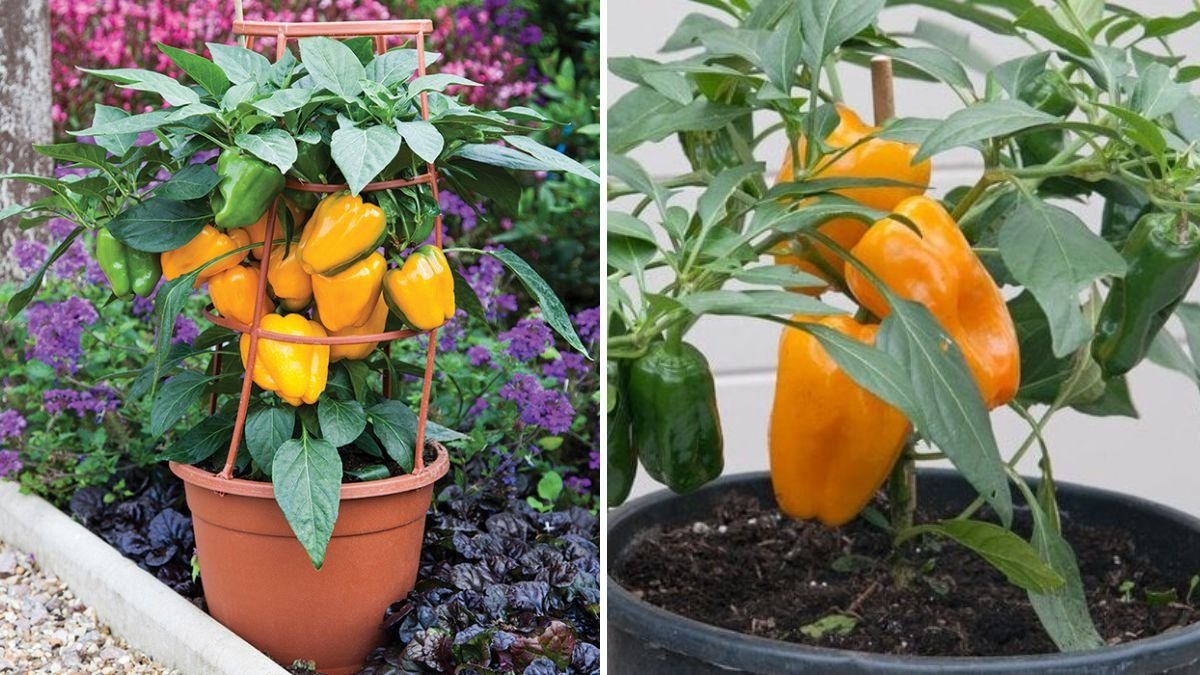
If you’re a fan of fiery flavors and want to spice up your home garden, Yellow Habanero peppers are an exciting choice to grow. Known for their vibrant golden color, fruity aroma, and intense heat, these peppers are not only stunning in the garden but also perfect for making hot sauces, salsas, and spicy dishes.
In this complete guide, we’ll walk you through every step of growing Yellow Habanero peppers from seed — from germination to harvest — so you can enjoy a bountiful crop of these golden gems right at home.
Introduction to Yellow Habanero Peppers
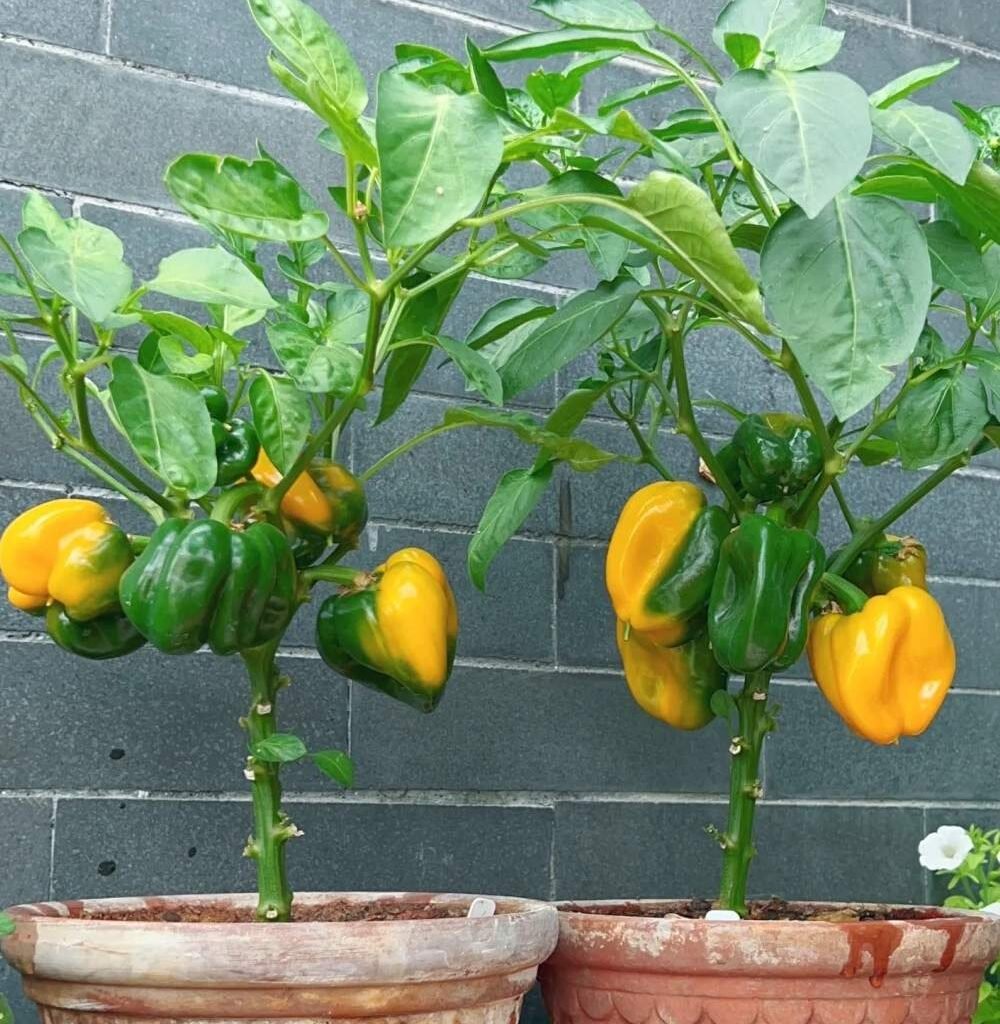
Yellow Habanero (Capsicum chinense) is a small, lantern-shaped pepper famous for its bright yellow color and extreme spiciness, measuring around 100,000–350,000 Scoville Heat Units (SHU). Despite their heat, they have a fruity, citrus-like flavor that makes them perfect for sauces and marinades.
Native to the Caribbean and Central America, Habaneros love warm weather, plenty of sunlight, and consistent moisture — making them a perfect plant for tropical or subtropical regions. Even if you live in cooler areas, you can grow them successfully in pots or greenhouses with the right care.
Step 1: Choosing and Preparing Your Seeds
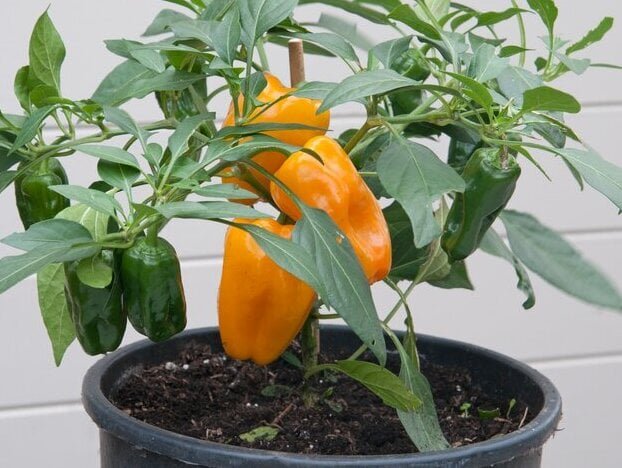
The first step is to start with high-quality Yellow Habanero seeds. Choose seeds from a reliable source to ensure strong germination and true-to-type plants. If you’re saving seeds from a previous harvest, make sure they are completely dry before planting.
Habanero seeds have a tough outer shell, so a little preparation can help speed up germination. Here’s how:
- Soak the seeds in warm water for 12–24 hours before sowing.
- Optionally, you can use a weak chamomile tea solution to help prevent fungal growth.
- Prepare small seed trays or pots filled with a well-draining seed-starting mix — a blend of coco peat, vermiculite, and perlite works great.
Step 2: Sowing the Seeds
Plant the soaked seeds about ¼ inch (6 mm) deep in the moist soil mix. Gently cover them and mist the surface to keep it damp.
Tip: Yellow Habanero seeds need warm temperatures (around 80–90°F or 27–32°C) to germinate. If your indoor environment is cool, use a seedling heat mat to maintain consistent warmth.
Place the trays in a warm, bright spot but out of direct sunlight until germination occurs.
Step 3: Germination and Early Seedling Care
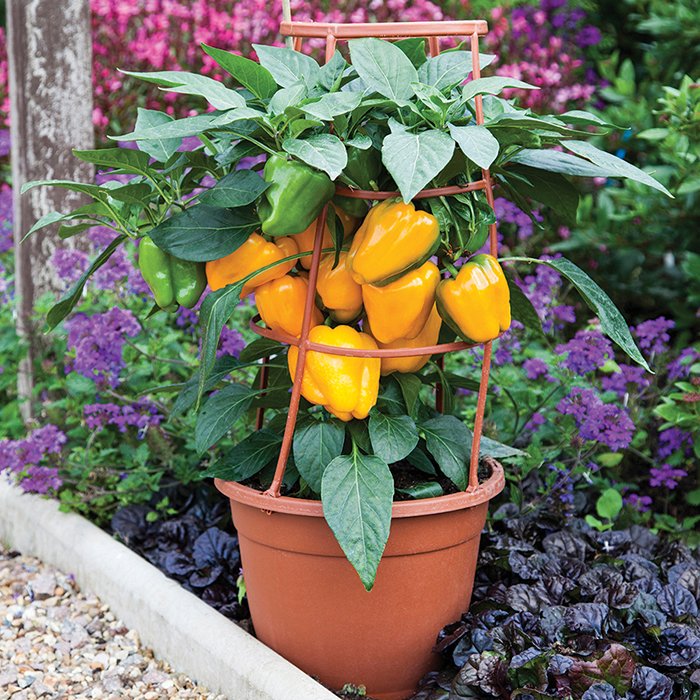
Germination can take 10–21 days, sometimes longer, depending on temperature and humidity. Be patient — Habanero seeds are slow but worth the wait!
Once the seedlings sprout, move them to a location where they can receive 12–16 hours of bright light daily. You can use a grow light if natural sunlight is limited.
Keep the soil consistently moist but not soggy. Overwatering at this stage can cause damping-off, a fungal disease that kills young seedlings.
When the seedlings have two to three sets of true leaves, they are ready for transplanting into larger pots.
Step 4: Transplanting Seedlings
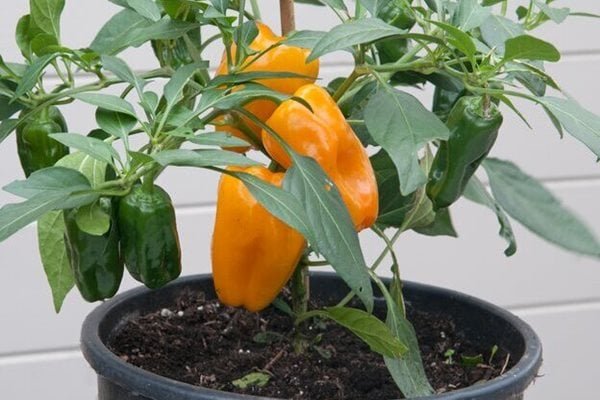
When your seedlings are around 4–6 inches tall, it’s time to transplant them into individual pots or your garden bed.
If planting outdoors, wait until all danger of frost has passed and the soil has warmed up. Habaneros thrive in warm conditions — ideally, daytime temperatures between 70–90°F (21–32°C).
For Containers:
- Use pots at least 12 inches (30 cm) wide with good drainage.
- Fill them with a nutrient-rich potting mix containing compost or well-rotted manure.
For Garden Beds:
- Choose a sunny location that receives 6–8 hours of sunlight daily.
- Enrich the soil with organic compost and ensure it drains well.
Carefully transplant your seedlings, burying them up to the first set of leaves to encourage strong root development. Water thoroughly after planting.
Step 5: Providing the Right Growing Conditions
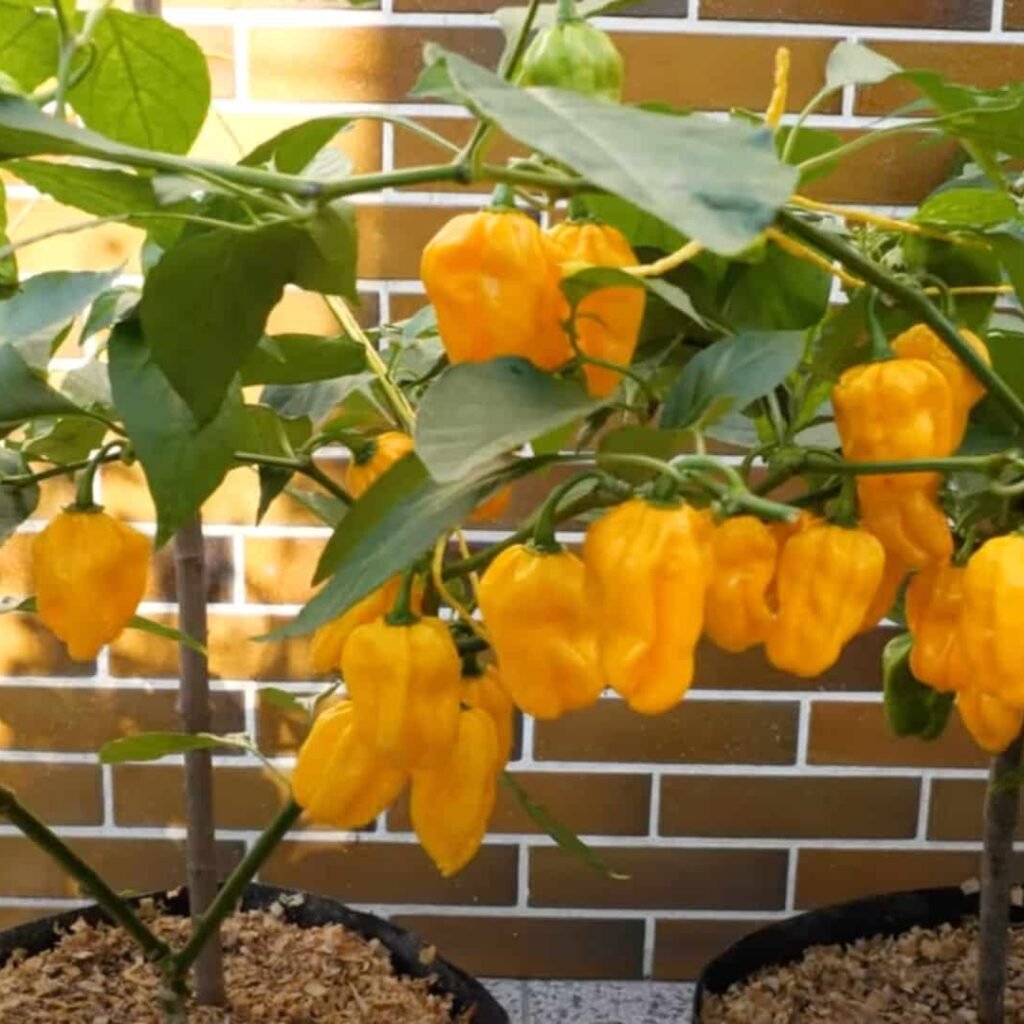
Yellow Habanero plants love heat and sunlight. Here’s how to give them the best growing environment:
Temperature
Maintain warm temperatures throughout the growing season. These peppers struggle in cool or overly humid conditions.
Sunlight
Provide full sun exposure for 6–8 hours daily. If growing indoors, place the plants near a south-facing window or use LED grow lights.
Watering
Water regularly but avoid waterlogging. The soil should stay evenly moist. During flowering and fruiting, reduce watering slightly to encourage more fruit production.
Mulching
Apply a layer of organic mulch like straw or dry leaves around the base to retain moisture and suppress weeds.
Step 6: Fertilizing for Healthy Growth
Feed your Habanero plants regularly for lush growth and abundant fruiting.
Fertilizing Schedule
- During vegetative growth – Use a balanced fertilizer (10-10-10 NPK) every two weeks.
- Before flowering – Switch to a fertilizer higher in phosphorus and potassium (like 5-10-10) to promote flowering and fruiting.
Alternatively, organic gardeners can use compost tea, fish emulsion, or seaweed extract to boost plant health naturally.
Step 7: Pollination and Flower Care
Habanero flowers are self-pollinating, but pollinators like bees can increase fruit set. If growing indoors, gently shake the plants or use a soft brush to transfer pollen between flowers.
Keep the plants healthy and pest-free during this stage, as stress can cause flowers to drop.
Step 8: Managing Pests and Diseases
Yellow Habanero plants are hardy but can occasionally be attacked by common garden pests such as:
- Aphids
- Whiteflies
- Spider mites
- Pepper weevils
You can manage these pests using neem oil spray, insecticidal soap, or homemade garlic-chili spray.
Also, watch out for fungal diseases like powdery mildew or root rot. Ensure good air circulation and avoid overwatering to prevent these problems.

Step 9: Pruning and Plant Support
Pruning helps keep your Habanero plant compact and encourages better airflow.
- Pinch off early flower buds to allow the plant to grow stronger before fruiting.
- Remove any yellowing or damaged leaves.
- If the plant becomes heavy with fruit, provide a stake or cage for support.
Step 10: Harvesting Yellow Habaneros
After about 90–120 days from transplanting, your peppers will mature and turn a brilliant golden yellow.
You can harvest them when they reach full color and firmness. Use a pair of scissors or pruning shears to cut the peppers off the plant, leaving a small piece of stem attached.
Tip:
Wear gloves when harvesting Habaneros — their oils can irritate the skin and eyes!
The peppers will continue to ripen if kept at room temperature for a few days after picking.
Step 11: Storing and Using Your Harvest
Yellow Habanero peppers can be stored and used in many delicious ways:
- Fresh use: Add to salsas, sauces, or marinades for a fiery kick.
- Drying: Slice and dry them for homemade chili flakes or powder.
- Freezing: Whole or sliced peppers can be frozen for long-term use.
- Fermenting: Make your own spicy Habanero hot sauce.
Their fruity flavor pairs wonderfully with tropical fruits like mango or pineapple, balancing the heat beautifully.

Bonus Tips for a Great Habanero Harvest
- Rotate crops yearly to prevent soil-borne diseases.
- Avoid over-fertilizing with nitrogen; it can lead to lush foliage but fewer fruits.
- Trim regularly to promote branching and more flower production.
- Be patient! Habaneros take longer to mature than other peppers but reward you with unmatched flavor and heat.
Final Thoughts
Growing Yellow Habanero peppers from seed is a rewarding journey that transforms your garden into a colorful, spicy paradise. With warmth, light, and care, these golden peppers will thrive and bless you with a fiery harvest perfect for your favorite dishes.
Whether you’re an experienced gardener or a beginner looking to try something bold, the Yellow Habanero is a fantastic choice that delivers both beauty and flavor. So, get those seeds started today — your future hot sauce will thank you!

Leave A Comment